Connecting Two Buildings With Fiber: A Central Florida Project Checklist
Connecting an office to a warehouse or a second building requires more than choosing a cable. A dependable fiber link needs a suitable route, compatible equipment at both ends and a clear plan for termination and testing. Here is what to review before requesting building-to-building fiber installation in Central Florida.
Start with what the second building needs
List the devices and services that must work there: computers, Wi-Fi, cameras, phones or other systems. Confirm the required connection speed and expected growth with your IT provider. These requirements guide the switch ports, optical transceivers and fiber specification.
Fiber carries data using light; ordinary fiber does not supply electrical power to remote equipment. The second building still needs suitable power for its switch, access points and other devices. Include backup-power requirements in the planning discussion if continuity matters.
Survey the complete route
Measure the intended pathway from the equipment location in one building to the termination point in the other. Include vertical sections, building entrances and indoor routing. A map measurement between exterior walls is only a starting point.
Review whether an existing conduit is usable or whether a new pathway is needed. Confirm access, utility coordination and responsibilities for excavation, conduit and surface restoration. Where applicable, GPZ can review trenching and directional boring options as part of the proposed work. The route and site conditions must be evaluated before a firm installation scope is established.
Match fiber, optics and the environment
Single-mode fiber is often considered for links between buildings, but the final choice should match the required distance, speed and equipment. Fiber type, connector type and the optical modules at both ends must work together. An available socket on a switch does not establish compatibility by itself.
Specify cable construction appropriate for the installed environment and the transitions into each building. Fiber avoids a conductive data path through its glass strands, but that does not eliminate electrical protection requirements for equipment or any metallic cable components.
Keep terminations protected and serviceable
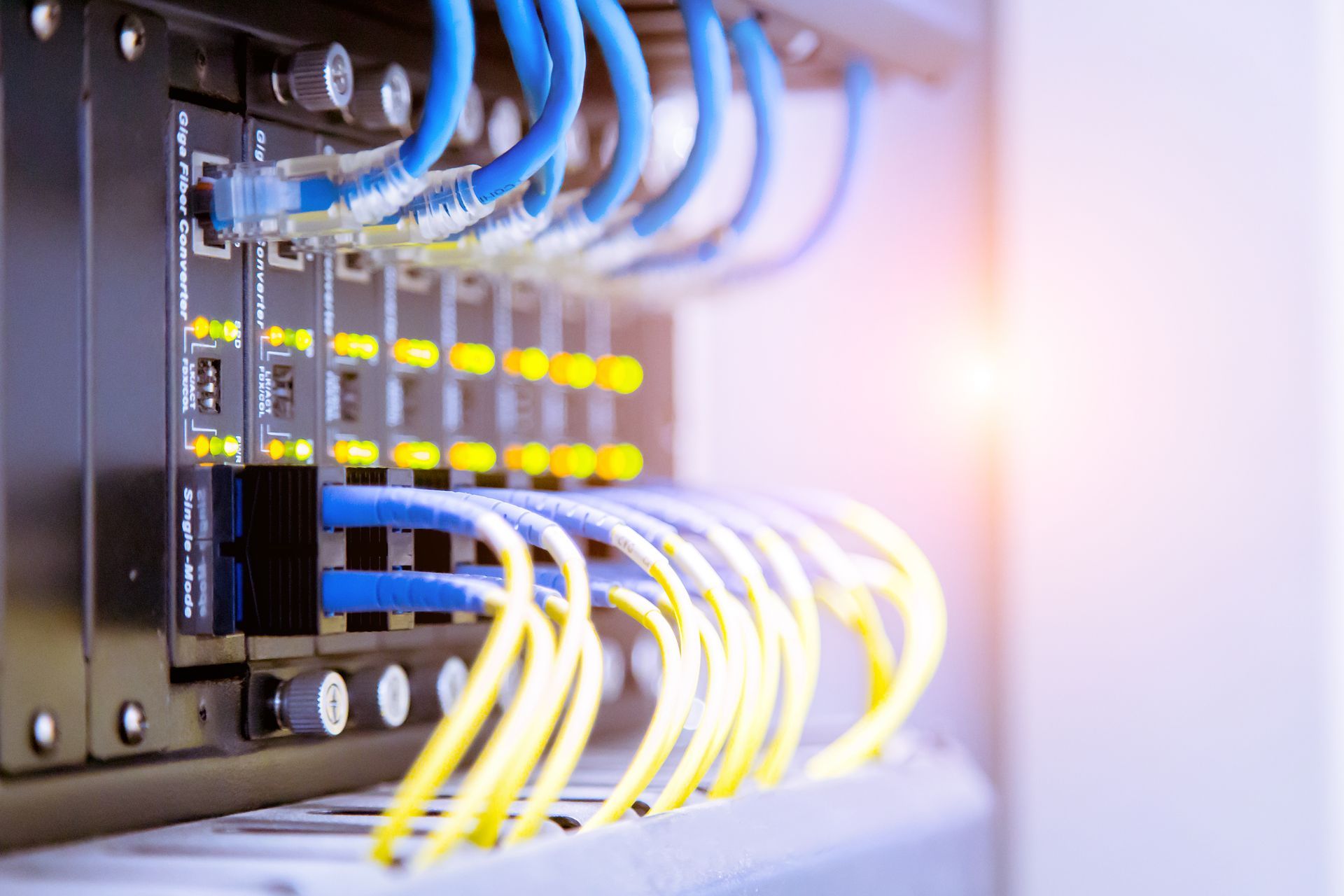
Plan the fiber enclosure or rack panel at each end. Indoor patch panels and exposed patch leads belong in suitable protected indoor spaces. Outdoor equipment requires an enclosure and components specifically suitable for those conditions.
Allow proper bend radius, cable support and service slack according to manufacturer requirements. Label the cable, strand assignments and ports so future service work does not depend on guesswork. Consider spare strands while defining the scope, especially when the pathway is difficult to access later.
Agree on testing and handover
The proposal should identify the termination method and required test results. Optical loss testing and, where appropriate, OTDR testing serve different purposes; determine the deliverables for this installation rather than relying only on a switch link light.
Coordinate the final network connection with your IT team. Request the route record, fiber assignments, labels and agreed test reports as part of closeout. GPZ provides fiber optic cabling and fusion splicing services for Central Florida projects.
Building-to-building fiber questions
Can we use fiber with our existing switches?
Often, if they support compatible optical modules. Otherwise, suitable additional equipment may be needed. Provide the switch model numbers during the survey.
Can fiber run in the existing conduit?
That depends on the pathway’s condition, capacity, routing and applicable installation requirements. Its availability needs to be verified onsite.
Request a fiber installation review
Contact GPZ Cabling with the property address, buildings to connect, approximate route and equipment details, or call 352-478-0676. We serve Orlando, Tampa and Central Florida. Florida license: EF20002178.
Technical reference: Corning fiber cabling fundamentals.