Commercial Network Installation: What Businesses in Florida Need to Know
This is a subtitle for your new post
Commercial Network Installation: What Businesses in Florida Need to Know
A practical guide for Florida business owners, facility managers, and IT decision-makers.
A reliable network is no longer optional for Florida businesses. Whether you run an office in Tampa, a medical practice in Orlando, a warehouse in Ocala, or a multi-site operation across the state, your commercial network installation directly affects productivity, security, and the ability to grow.
Poor cabling, outdated infrastructure, or a rushed install can lead to dropped connections, slow speeds, security gaps, and expensive rework later. This guide walks through everything Florida businesses should understand before starting a commercial network installation project.
What Is Commercial Network Installation?
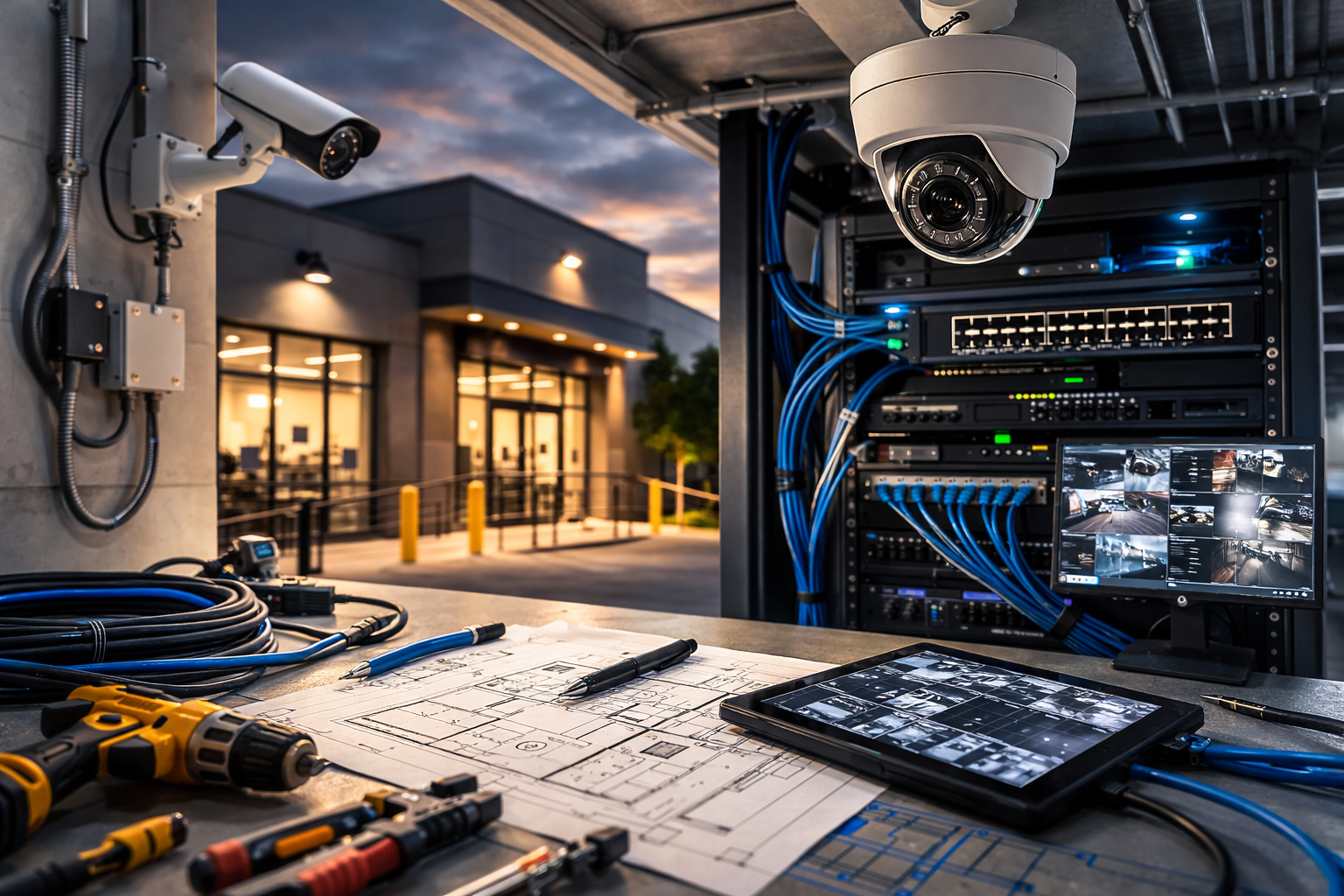
Commercial network installation is the process of designing, installing, and testing the physical and logical infrastructure that connects computers, phones, cameras, access control systems, wireless access points, and other devices in a business environment.
Unlike a simple home network, commercial installations typically involve:
- Structured cabling systems (Cat6, Cat6A, or fiber)
- Multiple telecom rooms or intermediate distribution frames (IDFs)
- Wireless access point (WAP) cabling and placement
- Rack and cabinet setup
- Cable pathways, trays, and conduit
- Testing, certification, and documentation
- Integration with security, AV, and building systems
The goal is a clean, scalable, and standards-compliant infrastructure that supports current needs and future growth.
Why Professional Installation Matters in Florida
Florida presents unique challenges that make professional commercial network installation especially important:
Climate and Environmental Factors
- High humidity can accelerate corrosion on poorly terminated connections.
- Frequent thunderstorms and lightning increase the need for proper grounding and surge protection.
- Hurricane-prone areas benefit from robust pathways and protected equipment locations.
Building Types and Growth
- Many Florida commercial spaces are older buildings being retrofitted or newer construction with strict plenum and fire-code requirements.
- Rapid business growth in markets like Tampa Bay, Orlando, and Central Florida means networks must be designed with expansion in mind.
Compliance and Standards
Commercial installations should follow TIA/EIA standards (especially TIA-568 and TIA-606 for labeling). Healthcare, education, and government facilities often have additional requirements. A professional low-voltage contractor understands these standards and local permitting expectations.
Key Components of a Commercial Network
1. Structured Cabling Backbone
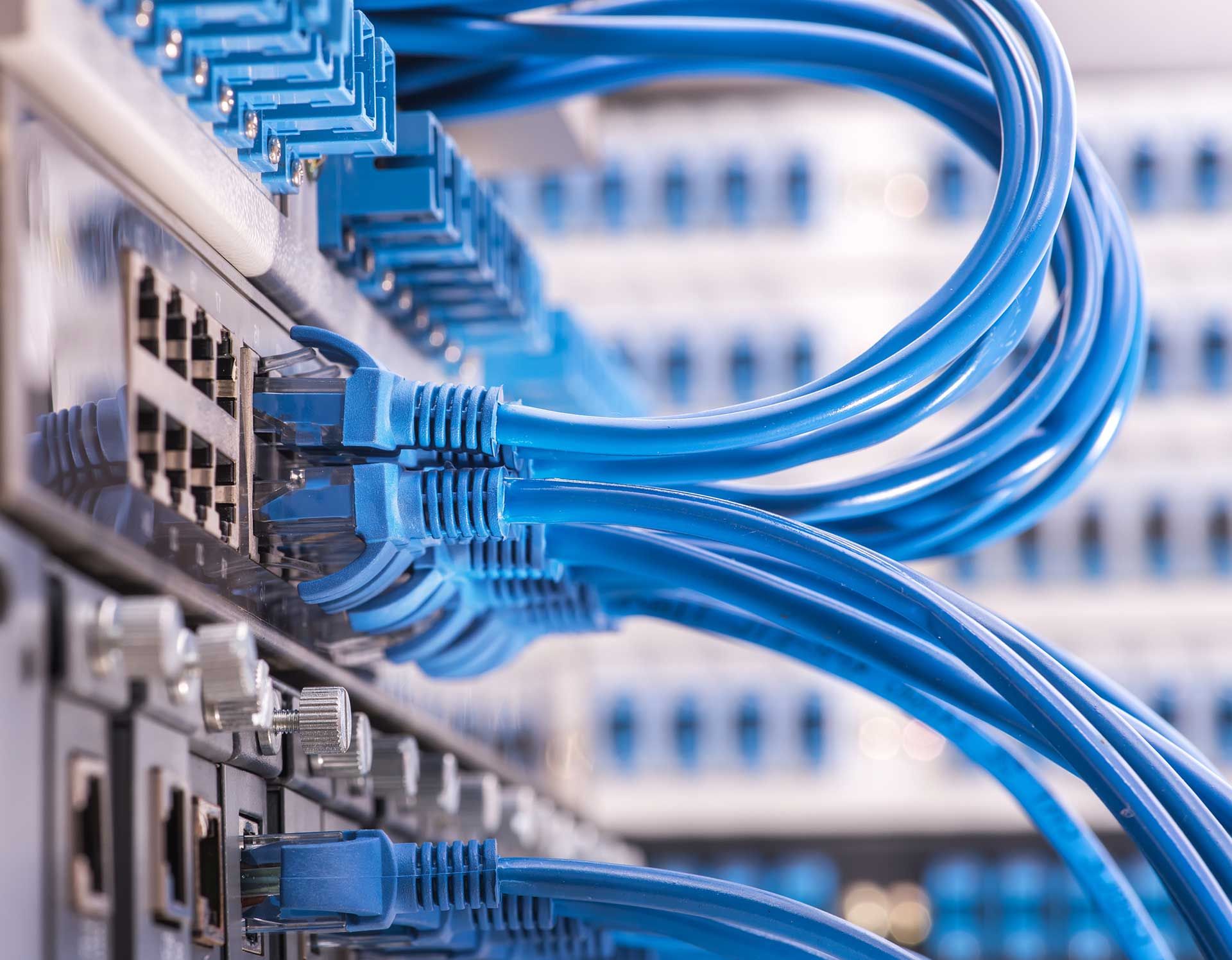
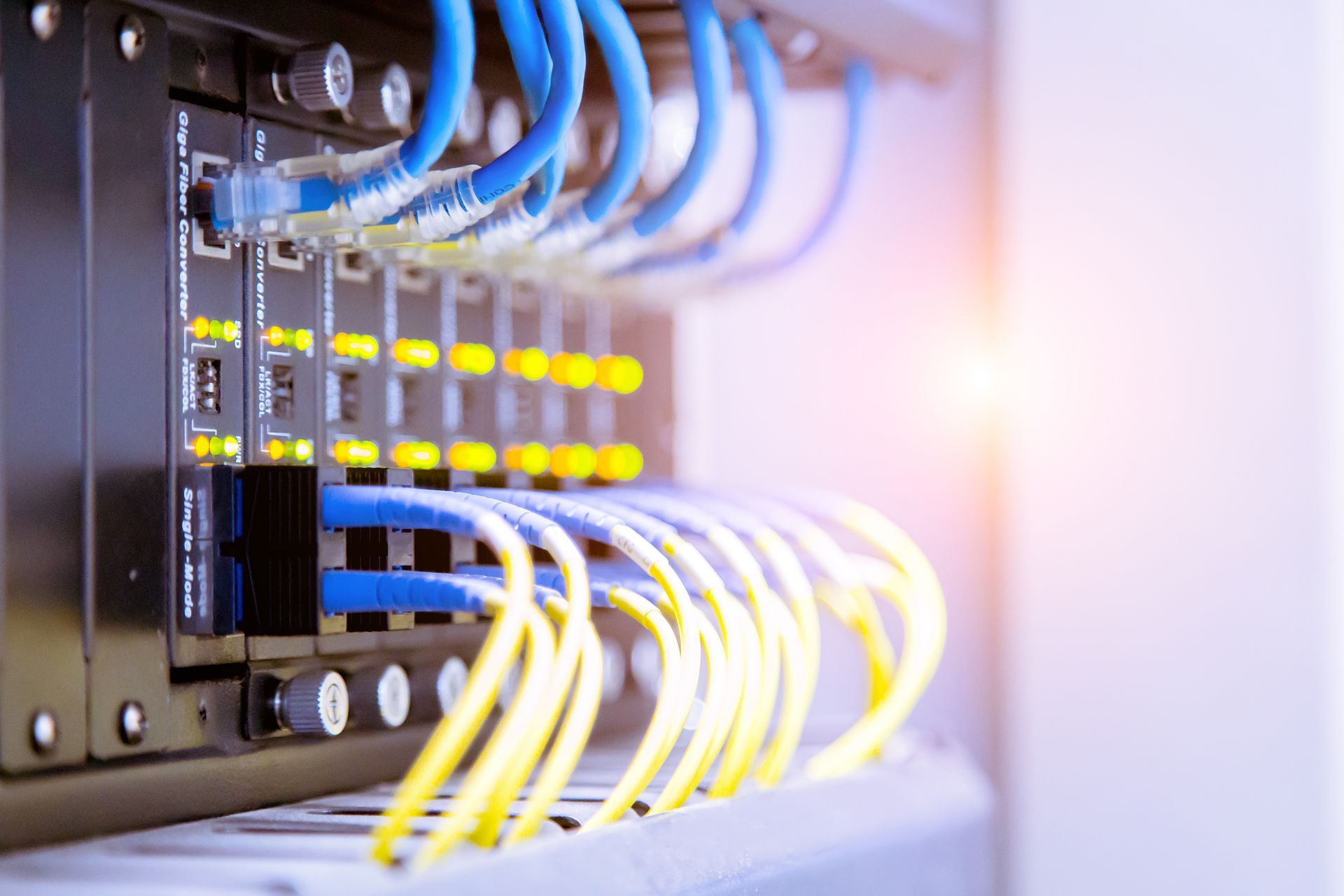
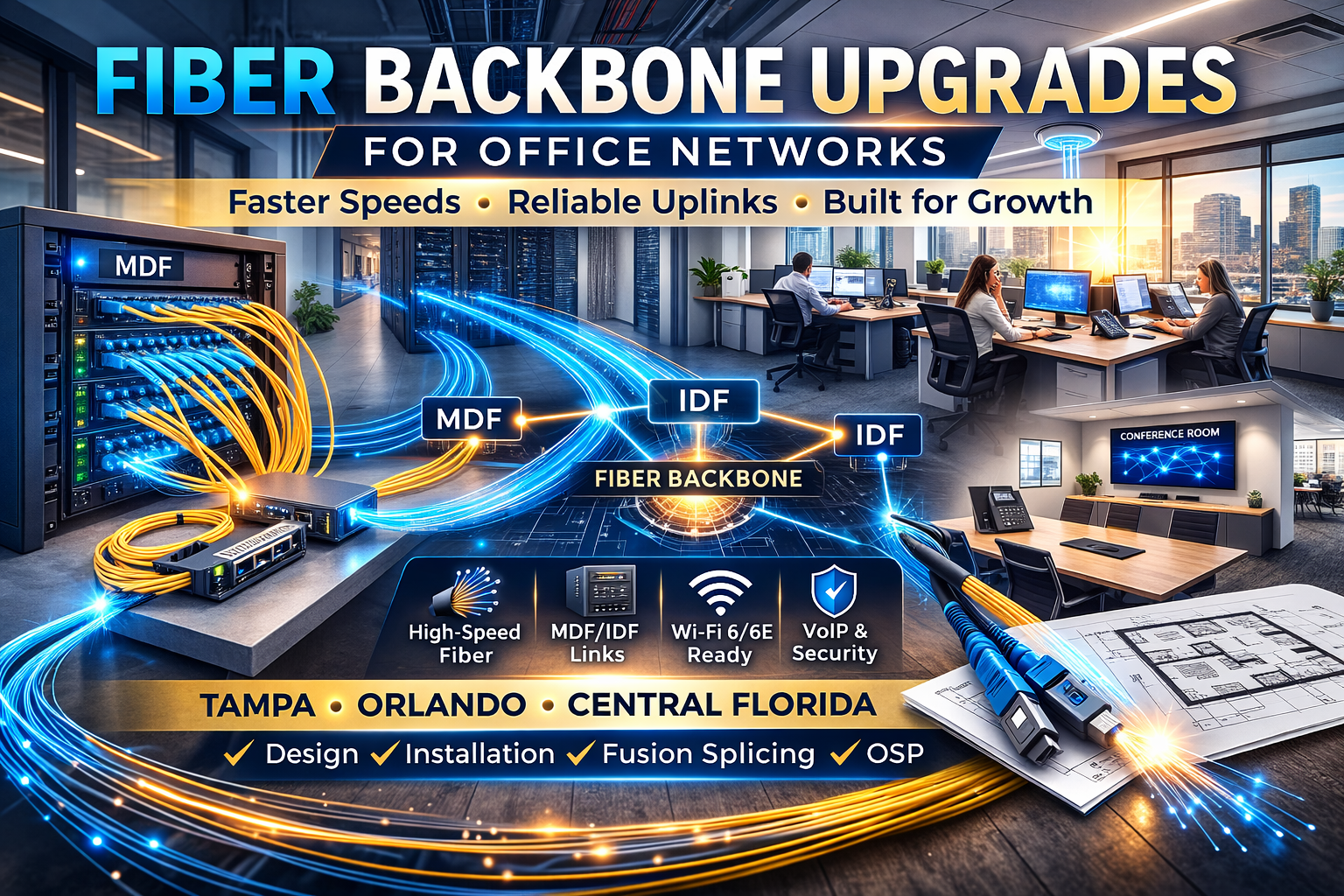
This is the foundation. Most modern commercial projects use Cat6 or Cat6A copper for horizontal runs (to desks and devices) and fiber optic cable for backbone connections between telecom rooms and longer distances. Cat6A is increasingly preferred for new installs because it supports 10-Gigabit Ethernet more reliably over longer distances.
2. Telecom Rooms & Racks
Properly designed main distribution frames (MDF) and intermediate distribution frames (IDF) keep equipment organized, cooled, and accessible. Poor rack layout is one of the most common sources of future headaches.
3. Horizontal Cabling (Data Drops)
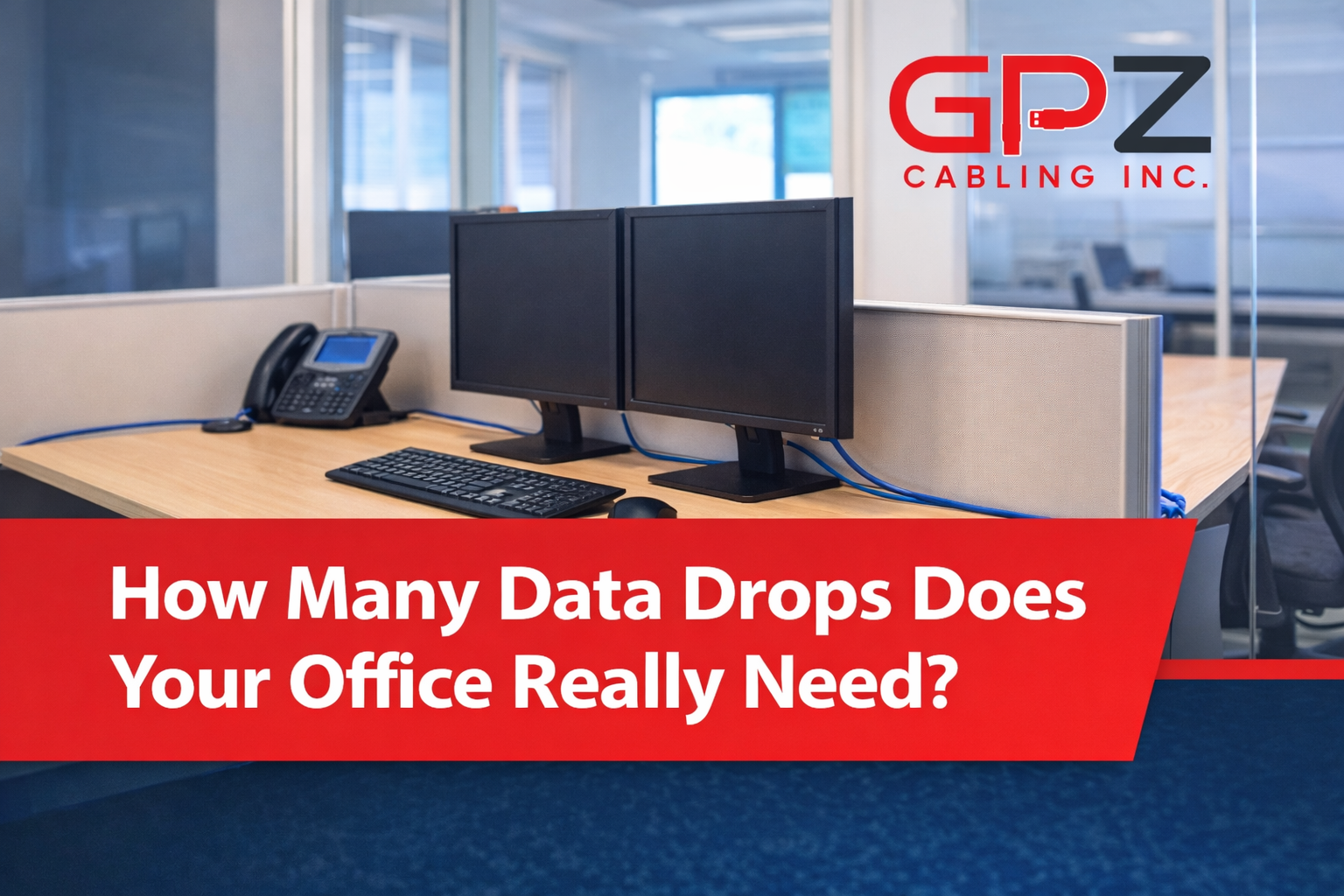
These are the individual cable runs from the telecom room to workstations, conference rooms, wireless access points, cameras, and other endpoints. Planning the right number and location of drops early avoids costly change orders.
4. Wireless Infrastructure
Most commercial networks now include enterprise wireless. Access points still need reliable Power over Ethernet (PoE) cabling and thoughtful placement for coverage and capacity.
5. Testing and Certification
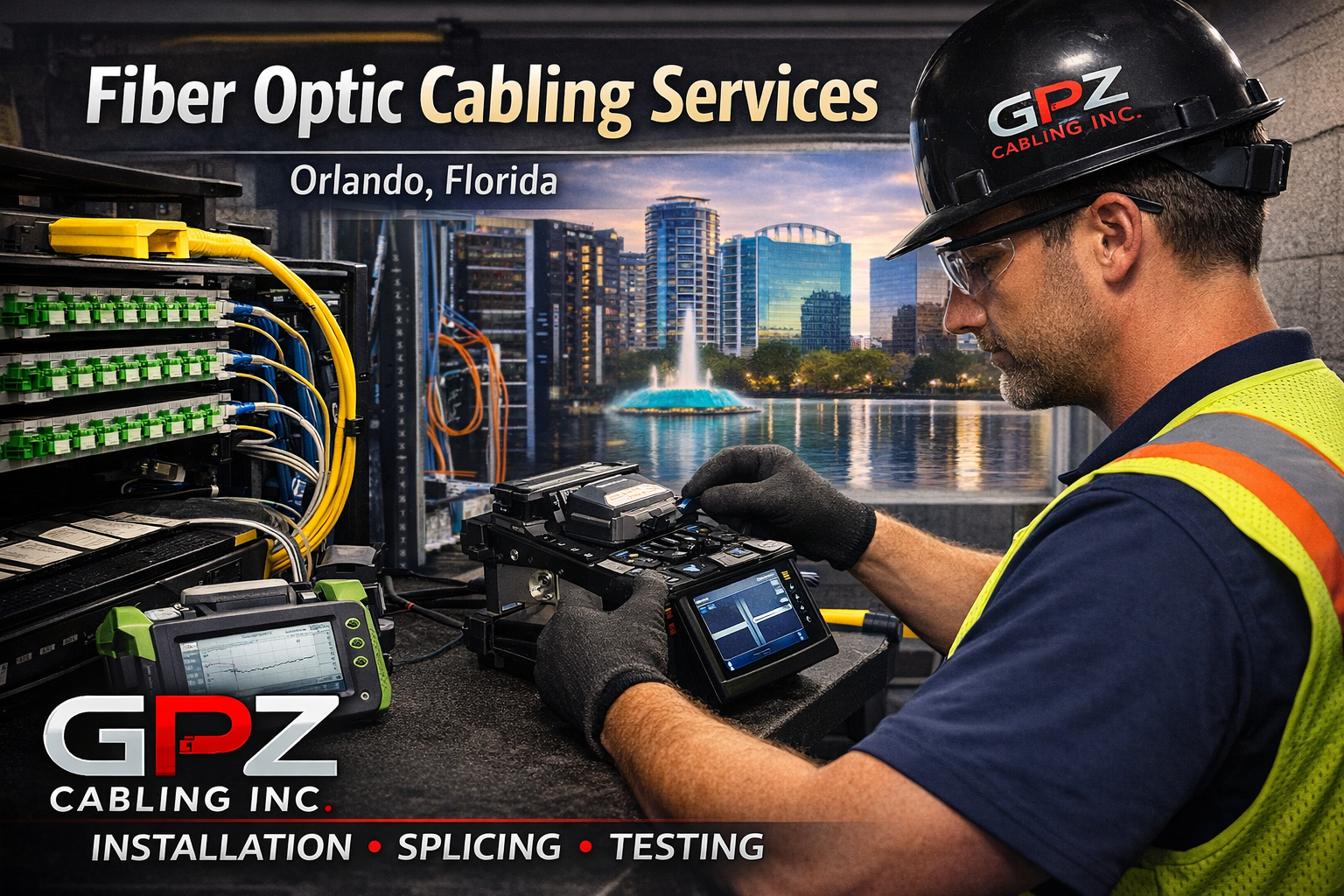
Every copper and fiber link should be tested and certified. This provides a baseline for performance and is essential for warranty and future troubleshooting.
The Typical Commercial Network Installation Process
A well-run project generally follows these phases:
Phase 1: Discovery & Design
- Site survey and review of floor plans
- Understanding current and future device counts, bandwidth needs, and systems (phones, cameras, access control, etc.)
- Pathway assessment (existing conduit, ceiling space, walls)
- Design of cable routes, drop locations, and rack elevations
Phase 2: Pathway & Infrastructure Prep
- Installation of cable trays, J-hooks, conduit, or innerduct as needed
- Core drilling or wall penetrations (with firestopping)
- Rack and cabinet placement
Phase 3: Cable Installation
- Pulling backbone and horizontal cables
- Terminating at patch panels and work-area outlets
- Labeling according to a clear scheme
Phase 4: Testing, Certification & Documentation
- Fluke or equivalent certification testing
- As-built drawings and cable schedules
- Handover of test results and warranties
Phase 5: Cutover & Support
- Coordinated cutover with minimal downtime
- Post-install support and training if needed
Cost Factors for Commercial Network Installation in Florida
Pricing varies widely based on scope, but these are the main drivers:
- Number of drops: Number of data drops / work-area outlets
- Cable type: Cat6 vs Cat6A vs fiber
- Building condition: New construction vs retrofit (retrofits usually cost more)
- Pathway difficulty: Distance and pathway complexity
- Equipment rooms: Rack, cabinet, and UPS requirements
- Certification: Testing, labeling, and documentation level
- Labor market: Local labor rates and permitting
Many Florida businesses find that investing in a properly designed and certified installation costs less over time than dealing with intermittent problems, limited capacity, or a full re-cable a few years later.
Common Mistakes Florida Businesses Should Avoid
- Underestimating future needs — Installing only what is needed today often forces expensive upgrades within 2–3 years.
- Skipping certification testing — Untested links are a leading cause of intermittent network issues.
- Poor labeling and documentation — Makes troubleshooting and moves/adds/changes far more expensive.
- Using residential-grade practices in a commercial environment — Different standards, different expectations.
- Ignoring grounding and bonding — Especially important in Florida’s lightning-prone climate.
- Choosing solely on lowest price — The cheapest bid frequently omits proper testing, pathways, or future capacity.
How to Choose the Right Commercial Network Installation Partner
Look for a contractor who can demonstrate:
- Experience with commercial and structured cabling projects (not just residential)
- Knowledge of TIA standards and proper testing procedures
- Florida licensing and insurance appropriate for low-voltage work
- Clear process for design, labeling, and documentation
- References from similar businesses or industries
- Ability to coordinate with general contractors, electricians, and IT teams
Ask to see sample as-built drawings and test results from previous projects. A professional firm will be happy to share them.
Final Thoughts
A commercial network installation is one of the most important infrastructure investments a Florida business can make. Done correctly, it supports reliable operations, easier expansion, and lower long-term IT costs. Done poorly, it becomes a constant source of frustration and expense.
Taking time to plan the design, choose the right cable plant, and work with an experienced low-voltage contractor pays dividends for years.
Need help planning a commercial network installation in Tampa, Orlando, Ocala, or anywhere in Central Florida?
Contact GPZ Cabling for a site survey and clear recommendations tailored to your building and business goals.