Commercial Office Network Cabling Installation: 8 Essentials for a Reliable Business Network
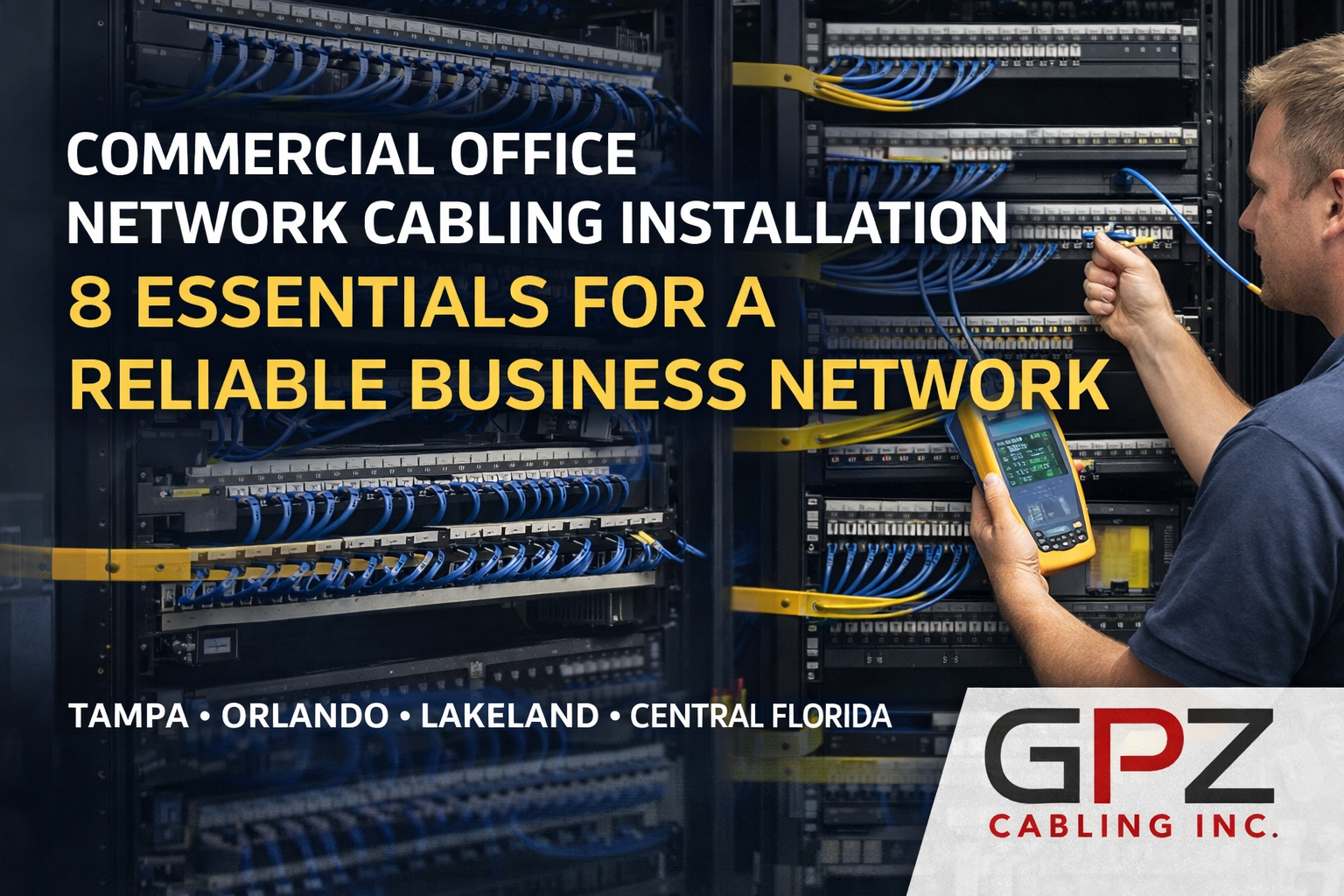
Commercial Office Network Cabling Installation: 8 Essentials for a Reliable Business Network
When a new office opens, everything seems ready — until the first Monday morning.
Phones sound “warbly.”
Video calls freeze when the conference room fills up.
Wi-Fi struggles despite adding more access points.
Most of the time, the issue isn’t your internet provider or your switch brand.
It’s the physical network infrastructure.
A properly designed commercial office network cabling installation determines whether your business runs smoothly — or constantly depends on IT support tickets.
For businesses in Tampa, Orlando, Lakeland, and across Central Florida, a structured cabling system isn’t just wiring — it’s the foundation of your operations.
What a Professional Office Cabling System Looks Like
A well-built commercial structured cabling system is designed for predictability and long-term support.
That means:
- Clearly defined MDF (Main Distribution Frame)
- Properly placed IDF (Intermediate Distribution Frame) closets
- Star topology cabling
- Clean pathways
- Documented labeling
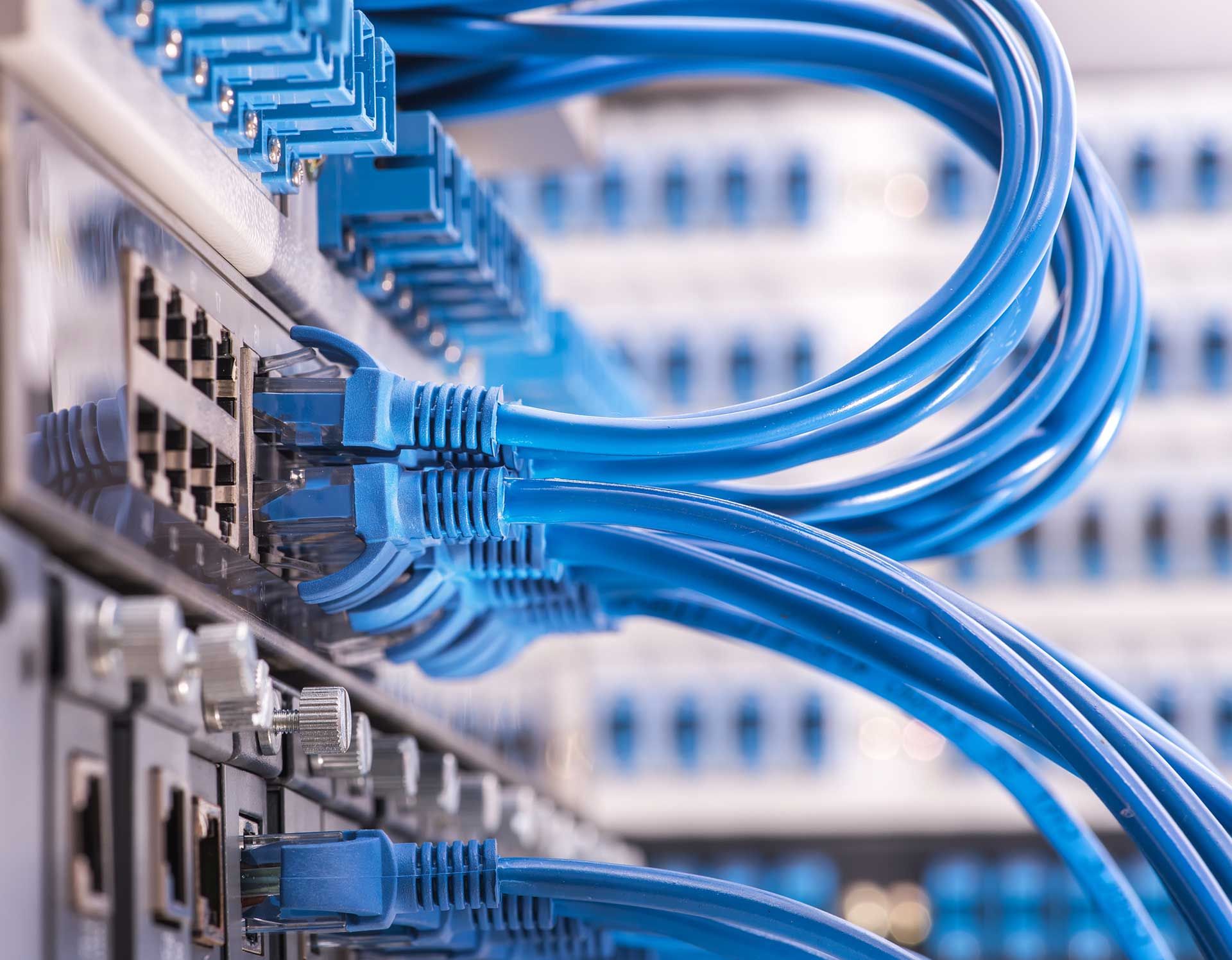
Every workstation, VoIP phone, access point, printer, camera, and badge reader connects back to the network closets through structured horizontal cabling — often supported by fiber backbone links.
This is especially important for:
- Medical offices
- Multi-suite tenant buildouts
- Professional offices
- Financial institutions
Even a 40-person office needs enterprise-grade infrastructure.
1. Start with Business Requirements — Not Cable Counts
A common mistake in office cabling projects is planning based on headcount instead of real device needs.
A 10-person area may require:
- VoIP phones
- Workstations
- Docking stations
- Printers
- Security cameras
- Access control devices
- Wireless access points
That quickly becomes 25–30 ports.
Planning a commercial office network cabling installation around real-world use prevents costly rework later.
2. Choose the Right Cabling: Cat6, Cat6A, or Fiber
Most Central Florida office environments use:
Cat6
Reliable and cost-effective for workstations.
Cat6A
Ideal for:
- High-density Wi-Fi
- Video conferencing
- Future 10Gb readiness
Fiber
Best used for:
- MDF-to-IDF backbone links
- Multi-building connections
- High-bandwidth environments
A professional network cabling contractor evaluates performance needs — not just installation cost.
3. MDF & IDF Placement Matters More Than You Think
Closet placement impacts:
- Cable length
- Expansion capability
- Troubleshooting ease
A poorly placed closet leads to:
- Long runs
- Congested pathways
- Performance limitations
Proper IDF placement shortens runs and improves scalability — especially in large office layouts or tenant buildouts.
4. Pathways and Cable Management Drive Long-Term Stability
A professional installation includes:
✔ Supported cable pathways
✔ Separation from electrical lines
✔ Organized rack layouts
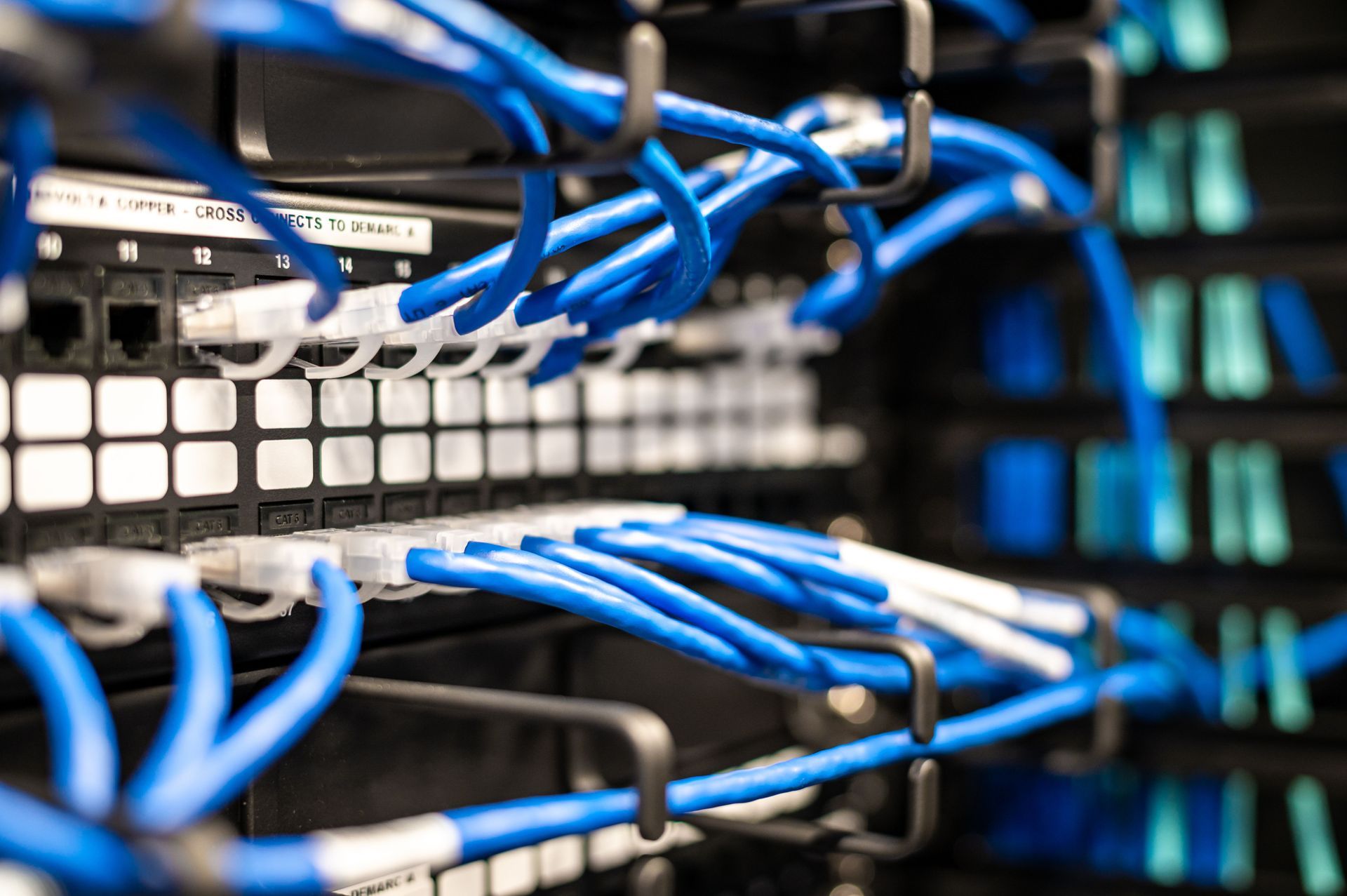
✔ Proper patch panel installation
Cabling should never be:
✖ Resting on ceiling tiles
✖ Tied to sprinkler systems
✖ Packed into tight spaces
Inside the rack, clean patching allows future moves without disruption.
5. Termination and Labeling Are Critical
Consistent terminations (typically T568B) prevent:
- Packet loss
- PoE instability
- Speed negotiation issues
Clear labeling connects:
- Faceplate
- Patch panel port
- Cable ID
Without it, every change becomes a troubleshooting project.
6. Plan for Power Over Ethernet (PoE)
Modern offices rely heavily on PoE devices:
- VoIP phones
- Security cameras
- Access control
- Wireless access points
A professional commercial cabling contractor ensures:
- Proper cable quality
- Sufficient switch PoE budget
- Device placement for performance
Installing security and access systems during your office cabling project keeps everything consistent.
7. Certification Testing Protects Uptime
Continuity tests aren’t enough.
Certification testing verifies:
✔ Category performance
✔ Bend radius integrity
✔ Proper terminations
✔ Run length compliance
Fixing issues during installation is easy.
Fixing them months later is not.
8. Avoid Common Office Cabling Mistakes
The most common issues we see:
- Treating cabling as an afterthought
- Relying too heavily on Wi-Fi
- Using multiple vendors without unified standards
Structured cabling is infrastructure — not an add-on.
When to Hire a Commercial Cabling Contractor
If your office includes:
- Multiple suites
- Security systems
- Access control
- Fiber backbone
- A/V systems
It’s best to involve a structured cabling contractor early.
A site survey can confirm:
- Closet locations
- Device placement
- Pathways
- Future expansion readiness
Office Network Cabling in Tampa & Central Florida
At GPZ Cabling Inc., we provide:
- Commercial office network cabling
- Structured cabling installation
- Fiber backbone systems
- Tenant buildout cabling
Serving:
📍
Ocala
📍 Central Florida
Start with a free site survey:
👉
https://www.gpzcabling.com
A reliable office network begins with the right foundation — not guesswork.