
The High Cost of Poor Planning for Office Data Cabling

February 11, 2024

The High Cost of Poor Planning for Office Data Cabling

The High Cost of Poor Planning for Office Data Cabling

The High Cost of Poor Planning: How Neglecting Office Data Cabling Can Impact Business


Are you ready to dive into the world of office data cabling and uncover its hidden costs? In today's fast-paced digital age, businesses cannot afford to overlook the importance of a well-planned and efficient cabling infrastructure. From sluggish internet speeds to constant connectivity issues, poor planning can cripple your business operations and hinder growth. Join us as we explore the high cost of neglecting office data cabling and discover how investing in this crucial aspect can make all the difference for your success.


Introduction: The Importance of Office Data Cabling in a Business Setting


In today's digital age, the success and efficiency of a business heavily relies on its technological infrastructure. From internet connectivity to communication systems, businesses rely on various forms of technology to operate smoothly and effectively. One crucial aspect of this infrastructure is office data cabling.


Office data cabling refers to the network of cables that connect different devices within an office setting, such as computers, printers, phones, and servers. These cables are responsible for transmitting data between these devices and ensuring seamless communication and connectivity.


The importance of proper data cabling in a business setting cannot be overstated. It is the backbone of any organization's internal communication system and plays a vital role in its day-to-day operations. Neglecting or overlooking this aspect can have significant consequences on a business's productivity, profitability, and overall success.


Efficient Communication


Effective communication is essential for any successful business. In today's fast-paced world, where time is money, delays due to poor cabling can be costly for businesses. Imagine trying to send an urgent email or make a critical phone call only to find out that your network is down due to faulty cabling. This can lead to missed opportunities or even loss of clients if it becomes a recurring issue.


Data Loss Prevention


In addition to efficient communication within the office space, properly installed and maintained data cabling also ensures the safe transfer and storage of important data. With businesses relying heavily on computer systems for storing important information such as customer data or financial records, any interruptions caused by poor cabling can result in data loss or corruption. This not only leads to potential legal issues but also disrupts daily operations and causes financial losses.


Scalability


As businesses grow and expand their operations, they will inevitably need more devices connected through their network. Properly planned office data cabling allows for scalability by ensuring that there are enough ports and cables to accommodate future growth. Neglecting this aspect can result in costly renovations or even the need to completely overhaul the cabling system to accommodate new devices.


Cost Savings


Investing in high-quality office data cabling may seem like an additional expense, but it can actually save businesses money in the long run. Poorly installed or maintained cabling leads to frequent interruptions, repairs, and replacements, which can quickly add up over time. On the other hand, a well-planned and properly installed cabling system will require minimal maintenance and provide long-term cost savings.


Office data cabling is a vital component of any business's technological infrastructure. Proper planning, installation, and maintenance of data cabling not only ensure efficient communication within an organization but also prevent data loss and support scalability while providing long-term cost savings. Neglecting this aspect can have significant consequences on a business's productivity and profitability.


What is office data cabling and why is it essential?


Office data cabling, also known as structured cabling, is the physical infrastructure that allows for the transmission of data and information within an office space. It includes all of the cables, connectors, and related hardware that are essential for a network to function properly.


In today's digital age, where businesses rely heavily on technology to operate efficiently, having a well-designed and properly installed office data cabling system is crucial. It may not seem like a priority compared to other aspects of running a business, but neglecting proper planning and maintenance of your office's cabling can have significant consequences.


One major reason why office data cabling is essential is its impact on network performance. A poorly designed or outdated cabling system can result in slow internet speeds, dropped connections, and overall network downtime. This can be frustrating for employees trying to complete their tasks and can lead to lost productivity and revenue for the business.


Moreover, with the rise of cloud computing and remote work arrangements, businesses need reliable networks more than ever. Slow or unreliable internet speeds due to inadequate cabling can hinder employees' ability to access important documents or communicate effectively with clients or colleagues from different locations.


Another critical aspect of office data cabling is its role in ensuring network security. Properly installed cables help maintain the integrity of your network by preventing unauthorized access or interference from outside sources. This is especially important for companies handling sensitive information such as financial records or personal customer data.


Additionally, having a structured cabling system makes it easier to troubleshoot any issues that may arise with your network. With organized cables labeled appropriately, IT personnel can quickly identify problematic areas and resolve them without disrupting the entire system.


Furthermore, an efficient office data cabling setup allows for scalability and adaptability as your business grows. By planning ahead and investing in high-quality materials during installation, you can avoid costly upgrades or replacements down the line when expanding your operations or adopting new technologies.


To sum it up, office data cabling is an essential investment for any business that values productivity, reliability, and security. Neglecting its importance can result in a high cost of poor planning, including lost revenue, frustrated employees, and potential security breaches. It is crucial to work with a professional cabling company to design and install a robust system that will support your business's current and future needs.


The consequences of neglecting office data cabling


The consequences of neglecting office data cabling can be severe and costly for businesses. Data cabling is the backbone of any office's communication and network infrastructure, connecting computers, phones, printers, and other devices to ensure seamless communication and data transfer. However, it is often overlooked or neglected in the planning process of setting up an office space.


One of the most immediate consequences of poor or neglected office data cabling is a disruption in daily operations. With outdated or poorly installed cabling systems, there is a higher risk of frequent network downtime, slow data transfers, dropped calls, and malfunctioning devices. These disruptions not only decrease productivity but also result in frustrated employees and dissatisfied customers.


Moreover, neglecting proper data cabling can have long-term financial implications for a business. Inefficient cabling systems often require frequent repairs or replacements due to wear and tear. This leads to increased maintenance costs and can quickly add up over time. Additionally, when cables are not organized correctly during installation, it becomes challenging to troubleshoot issues when they arise. This results in more extended periods of downtime that directly impact business revenue.


Another significant consequence of neglecting office data cabling is security vulnerabilities. Poorly planned or maintained cabling systems make it easier for hackers to access sensitive company information through physical means such as tapping into cables or intercepting signals from unsecured wires. This puts confidential company information at risk and can result in substantial financial losses if compromised.


In today's fast-paced business environment where cloud-based services are becoming increasingly popular, inadequate data cabling can hinder growth opportunities for businesses. Slow internet speeds caused by outdated wiring can affect the performance of cloud-based applications that are essential for modern-day businesses' smooth functioning.


Neglecting office data cabling can also lead to compliance issues with industry regulations related to IT infrastructure standards. If your business fails to comply with these regulations due to poor planning or maintenance of your wiring systems, it can result in hefty fines and damage to your company's reputation.


The consequences of neglecting office data cabling go beyond just a few minor inconveniences. It can significantly impact a business's operations, finances, security, and growth potential. To avoid these risks and ensure seamless connectivity within your office space, it is crucial to invest in proper planning and maintenance of your data cabling infrastructure.


Common problems that can arise from poor planning and maintenance of office data cabling


Poor planning and maintenance of office data cabling can lead to numerous problems that can negatively impact your business. From disrupted operations to increased costs and potential safety hazards, it is crucial for businesses to understand the common issues that can arise from neglecting their office data cabling.


1. Network Disruptions:

One of the major consequences of poor planning and maintenance of office data cabling is network disruptions. When cables are not installed or maintained properly, they can become damaged, loose, or tangled which can cause interruptions in internet connectivity and communication systems. This can result in downtime and loss of productivity as employees are unable to access vital information or communicate with clients.


2. Slow Data Transfer:

Inefficiently planned and poorly maintained cabling systems can cause slow data transfer speeds. This means that tasks such as file sharing, online collaboration, and video conferencing may take longer than usual, leading to delays in business operations. Slow data transfer also affects customer service as clients may have to wait longer for responses from your team.


3. Security Breaches:

Another problem that arises from inadequate planning and maintenance of office data cabling is security breaches. Faulty cables or improper installation leave your business vulnerable to cyber-attacks such as hacking or malware infections which put sensitive company information at risk. This not only damages the reputation of your business but also creates financial losses from potential legal actions taken against you by affected parties.


4. Fire Hazards:

Neglected cables pose a significant fire hazard in the workplace if left exposed or improperly installed near heat sources such as electrical outlets or machinery. Frayed wires combined with high temperatures could potentially start a fire which puts the safety of your employees at risk along with causing damage to property.


5.Growth Limitations:

Poorly planned cabling systems often lack scalability which means they cannot accommodate future growth in technology needs without significant upgrades or replacements being required. This leads to unnecessary expenses for the business along with disruptions in operations during the upgrade process.


Neglecting proper planning and maintenance of office data cabling can have severe consequences for any business. It is crucial to invest time and resources into ensuring that your cabling system is installed and maintained correctly to avoid the costly issues mentioned above. Regular inspections and upgrades should also be conducted to ensure the smooth functioning of your business's data infrastructure. By prioritizing the management of your office data cabling, you can prevent these common problems from impacting your business and maintain a reliable and efficient network at all times.


Impact on business productivity and bottom line


Neglecting office data cabling can have a significant impact on the productivity and bottom line of any business. In today's digital age, businesses rely heavily on technology and efficient communication to run their operations smoothly. Any disruptions or downtime caused by poor planning and maintenance of data cabling can result in lost productivity, missed opportunities, and ultimately affect the company's bottom line.


One of the primary ways that neglecting office data cabling can impact business productivity is through network downtime. When cables are not properly installed or maintained, it can lead to frequent disruptions in connectivity. This means employees may not be able to access important files or information when they need it, causing delays in their work and resulting in decreased productivity. Furthermore, if your business relies on VoIP systems for communication with clients or remote teams, network downtime can be even more detrimental as it hinders effective communication within the company.


Poorly planned cabling infrastructure also leads to cluttered and disorganized workspaces. This may seem like a minor issue at first glance but can significantly impact employee efficiency and overall productivity. Disorganized cables not only look unprofessional but also pose safety hazards such as tripping over loose wires or accidentally unplugging important equipment. Moreover, tangled cables make troubleshooting complex issues much more time-consuming for IT personnel, taking up valuable time that could be spent on other tasks.


Aside from affecting day-to-day operations, neglecting office data cabling can also have long-term financial implications for businesses. As mentioned earlier, network downtime directly affects employee productivity which translates into lost revenue opportunities for the company. According to a study by IDC Research, businesses lose an average of $100 million annually due to IT downtime alone. Additionally, having to frequently replace damaged cables or troubleshoot issues caused by poor cabling infrastructure can add up to substantial costs over time.


Neglecting office data cabling has a direct impact on business productivity and bottom line. It is crucial for businesses to invest in proper planning and maintenance of their cabling infrastructure to ensure smooth operations and avoid costly disruptions. By taking the time and effort to implement a well-organized and efficient cabling system, businesses can save time, money, and resources in the long run, ultimately leading to improved productivity and increased profitability.


Tips for proper planning and maintenance of office data cabling


Proper planning and maintenance of office data cabling is crucial for any business to ensure smooth operations and avoid costly interruptions. In this section, we will discuss some important tips for effectively managing your office data cabling.


1. Plan Ahead: The first step in proper data cabling maintenance is to have a well-thought-out plan in place. This includes identifying the current and future needs of your business, determining the best cabling infrastructure for your office space, and creating a detailed layout of the network.


2. Use High-Quality Cables and Components: Investing in high-quality cables and components can save you time and money in the long run. Cheap or substandard cables may result in frequent disruptions, slow internet speeds, and even damage to connected devices.


3. Label Everything: Proper labeling is essential for easy identification and troubleshooting of cabling issues. Each cable should be labeled with its corresponding port number on both ends to prevent confusion during maintenance or repairs.


4. Keep Cables Organized: A neat and organized cabling system not only looks professional but also makes it easier to identify potential problems quickly. Avoid having loose or tangled cables as they can lead to tripping hazards or accidental disconnections.


5. Regularly Inspect Cables: It is crucial to inspect your office data cabling regularly for any signs of wear and tear or damage. This can help detect potential issues before they turn into major problems that could disrupt your business operations.


6. Implement Cable Management Solutions: Cable management solutions such as racks, trays, ties, and covers can help keep cables neatly organized while also protecting them from damage caused by environmental factors like heat or dust.


7. Train Employees on Proper Handling: Educating your employees on how to properly handle cables can go a long way in preventing accidental damages that could potentially disrupt business operations.


8. Schedule Professional Maintenance Checks: While regular inspections are useful, it is also important to schedule professional maintenance checks at least once a year. This can help identify any underlying issues and ensure that your cabling system is up to industry standards.


9. Keep Records: Keeping detailed records of your cabling system, including installation dates, maintenance schedules, and repairs, can provide valuable insights for future upgrades or replacements.


By following these tips for proper planning and maintenance of office data cabling, businesses can avoid the high cost of neglecting this vital aspect of their operations. It is crucial to prioritize the management of office data cabling to ensure uninterrupted connectivity and efficient business processes.


- Hiring a professional cabling company


Hiring a professional cabling company is essential for any business that wants to ensure smooth and efficient operations. While it may seem like a cost-effective option to try and handle data cabling in-house, the long-term consequences can far outweigh the initial savings.


One of the main benefits of hiring a professional cabling company is their expertise and experience. These companies have trained technicians who are knowledgeable about the latest industry standards and best practices for data cabling. This means they can design and install a network infrastructure that meets your specific business needs, ensuring optimal performance and future scalability.


Additionally, professional cabling companies have access to high-quality materials and tools needed for installation. This ensures that your network is built with top-of-the-line components, reducing the risk of downtime due to faulty or subpar equipment. Not only does this save you money in the long run by avoiding costly repairs, but it also increases efficiency and productivity for your employees.


Another advantage of hiring professionals is their ability to properly plan out the layout of your office space. They understand how important it is to have an organized and efficient cable management system in place, as it not only improves aesthetics but also reduces potential hazards such as tripping over loose cables. With their expertise, they can create a structured cabling system that minimizes clutter while optimizing performance.


Furthermore, professional cabling companies offer warranties on their workmanship and materials used. This gives you peace of mind knowing that if any issues arise with your network infrastructure due to poor installation or faulty equipment, it will be taken care of at no additional cost.


When considering hiring a professional cabling company, make sure to do thorough research before making a decision. Look for reputable companies with positive reviews from previous clients and ask about their certifications and experience in handling similar projects.


Neglecting office data cabling can have a significant impact on your business's success. By investing in a professional cabling company, you are not only ensuring a reliable and efficient network infrastructure, but also saving yourself time, money, and potential headaches in the long run. Remember, proper planning and implementation of data cabling is crucial for the smooth operation of your business.


- Regular inspections and upgrades


Regular inspections and upgrades are crucial to maintaining a reliable and efficient data cabling system in any office environment. Neglecting these important tasks can lead to serious consequences for your business, including unexpected downtime, increased costs, and potential security risks.


Inspections should be conducted on a regular basis, ideally every six months or at least once a year. During an inspection, a professional cabling technician will examine the entire cabling infrastructure to ensure that it is functioning properly and identify any potential issues that may arise in the future.


One of the main benefits of regular inspections is the early detection of any problems. This allows for prompt repairs or upgrades before they escalate into larger and more costly issues. For example, during an inspection, technicians may discover damaged cables or connectors that could potentially fail in the near future. By identifying these issues early on, they can be replaced or repaired before they cause disruptions to your business operations.


In addition to inspections, regular upgrades are also necessary to keep up with the ever-evolving technology landscape. As technology advances at a rapid pace, outdated cabling systems can quickly become inadequate for handling modern data demands. Upgrading your data cabling system ensures that it is capable of supporting newer technologies such as cloud computing and faster internet speeds.


Moreover, outdated cabling systems can pose security risks for your business. With cyber threats becoming increasingly prevalent in today's digital world, it is essential to have up-to-date cabling infrastructure that can protect sensitive company data from being compromised.


Regular upgrades also provide opportunities for businesses to improve their overall efficiency and productivity. With newer and more advanced cabling systems in place, employees can experience faster connectivity speeds and better network performance which ultimately leads to increased productivity.


Furthermore, investing in regular inspections and upgrades demonstrates a commitment towards maintaining high-quality standards within your organization. This not only instills confidence in clients but also sends a message to employees that their workplace is equipped with top-of-the-line technology and infrastructure, creating a positive work environment.


Regular inspections and upgrades are crucial for the smooth functioning of any business's data cabling system. By investing in these preventative measures, you can avoid costly downtime, improve efficiency and productivity, enhance security, and showcase your commitment to maintaining high standards within your organization. Don't neglect this important aspect of your business - schedule regular inspections and upgrades today.


- Labeling and


Labeling and organization are essential components of any successful data cabling system. Without proper labeling, the management and maintenance of your office cabling can quickly become a nightmare. This can lead to costly downtime, confusion, and even safety hazards.


One of the main reasons for labeling your office data cabling is to ensure that it is easily identifiable and traceable. Imagine trying to troubleshoot a network issue in a tangle of unmarked cables. It would be like searching for a needle in a haystack. Properly labeled cables allow technicians to quickly locate and address any issues, minimizing downtime and keeping your business running smoothly.


Moreover, labeling helps with organization and streamlines the installation process. When new cables need to be added or old ones replaced, having clear labels makes it easier for technicians to know where each cable should go. This saves time and reduces errors, as well as preventing potential damage to other cables during the installation process.


In addition to simplifying installation and troubleshooting processes, accurate labeling also plays a crucial role in maintaining safety standards within an office environment. In case of emergencies such as fire or power outages, properly labeled cables enable employees or emergency responders to identify which cable belongs to which equipment or device without risking electrocution or causing further damage.


Furthermore, labeling also allows for proper documentation of your cabling infrastructure. With each cable clearly marked with its destination and purpose, it becomes easier for IT professionals to maintain an accurate inventory of all the cabling in use within their organization. This information is valuable when planning upgrades or expansions since it ensures that new installations do not interfere with existing systems.


Properly labeled data cabling also contributes significantly towards creating an aesthetically pleasing work environment. A cluttered mess of tangled wires not only looks unprofessional but can also pose tripping hazards for employees. By labeling the cables neatly and organizing them into designated paths or channels, you can create a visually appealing and safer workspace for your employees.


Labeling is a crucial aspect of data cabling that should not be overlooked. It promotes organization, simplifies troubleshooting and maintenance processes, ensures safety standards are met, aids in documentation, and contributes to a more professional work environment. Neglecting this vital step can lead to costly consequences for your business in the long run.

March 9, 2026
Fiber Optic Cabling Services in Central Florida: Installation, Splicing, and Testing A fiber run that looks fine on day one can still become a problem six months later. That usually happens when the installation was treated like a simple cable pull instead of a system that needs to be designed, terminated, tested, and documented correctly. For IT managers, facility teams, property managers, and general contractors, that distinction matters. Fiber is often the backbone between telecom rooms, suites, IDFs, MDFs, and even separate buildings. If it is installed poorly, the result is not just a weaker signal. It can mean avoidable downtime, failed certifications, messy repairs, and expensive return visits. GPZ Cabling Inc. provides professional fiber optic cabling services throughout Central Florida, including Orlando, Tampa, Lakeland, Clermont, Leesburg, and surrounding areas. What Fiber Optic Cabling Services Should Actually Include Good fiber optic cabling services go well beyond pulling cable through conduit or ceiling space. The real value is in planning the pathway, choosing the right fiber type, protecting bend radius, managing terminations, and verifying performance before turnover. That starts with scope. Some projects need backbone fiber inside a single building. Others need outside plant connectivity between structures, which may also involve trenching, directional boring, handholes, conduit, and demarc extensions. A contractor that can handle both the cabling work and the surrounding low-voltage infrastructure usually reduces coordination issues and finger-pointing later. It also matters whether the environment is office, medical, industrial, retail, education, or mixed-use commercial. A clean corporate office build-out has different requirements than a warehouse, a healthcare facility, or a campus with multiple detached buildings. The cable type, pathway protection, labeling standards, and testing process should reflect the site, not a one-size-fits-all approach. Fiber Optic Cabling Services We Provide Professional fiber projects often involve multiple components beyond the cable itself. At GPZ Cabling Inc., our commercial fiber optic services include: • Fiber backbone installation • Building-to-building fiber connectivity • Fusion splicing • Fiber optic termination and patch panels • Fiber troubleshooting and repair • OTDR testing and certification • Demarcation extensions • Data center fiber builds • Campus fiber network installations • Fiber upgrades and replacements These services support offices, medical facilities, warehouses, retail centers, schools, and multi-building commercial properties. Choosing the Right Fiber Optic Cabling Service for the Job Not every fiber project calls for the same materials or the same installation method. Singlemode and multimode fiber serve different purposes, and there is no benefit in paying for the wrong design. If you are connecting longer distances, linking buildings, or planning for future bandwidth growth, singlemode fiber is often the best long-term solution . For shorter internal backbone runs inside commercial buildings, multimode fiber may still be appropriate depending on the network design and active equipment. The same goes for termination strategy. Pre-terminated assemblies can work well in controlled environments, but fusion splicing and field termination are often better choices when pathways are complex or exact distances are required. Fusion splicing typically provides lower signal loss and stronger long-term reliability than mechanical alternatives. A qualified contractor should be able to explain those trade-offs clearly. If the answer is simply “this is what we always use,” that is a red flag. Why Workmanship Matters in Fiber Installation Fiber cable is not forgiving of careless installation. Pull tension, bend radius, pathway congestion, enclosure management, and cleanliness all affect final performance. A job can fail even when high-quality materials are used if the field practices are poor. That is why professional workmanship standards are critical in fiber optic cabling services. Clean routing, proper supports, disciplined slack management, and clearly labeled strands make future maintenance easier and reduce risk during upgrades. On the termination side, contamination is a constant issue. A connector that is not properly cleaned and inspected can create signal loss that wastes hours of troubleshooting. Fiber projects also require coordination with other trades including electricians, IT teams, access control vendors, security camera installers, and building management. A qualified contractor should not just install the cable. They should manage the work so the installation is completed without disrupting the rest of the project. Building-to-Building Fiber Connectivity One of the most common needs across Central Florida commercial properties is extending connectivity between buildings on the same property. Examples include: • Connecting an office building to a warehouse • Linking telecom rooms between structures • Connecting a leasing office to detached amenities • Networking multiple medical buildings on a campus This type of work is where many projects go sideways because the fiber installation is only one part of the job. Outside plant conditions, underground obstructions, conduit capacity, building entry points, and weather exposure all affect the final result. If multiple vendors handle trenching, boring, conduit installation, fiber pulling, splicing, and testing, coordination problems often arise. When a single contractor manages both the outside plant pathway and the fiber installation , projects typically run smoother and quality is easier to control. Fiber Testing, Certification, and Documentation A fiber link is not complete just because light comes up. Professional fiber optic cabling services should always include testing and documentation. Depending on the project, this may include: • Insertion loss testing • Polarity verification • OTDR testing • Fiber certification reports • Labeling and identification The goal is simple: verify that the installed fiber meets performance standards and create a record that supports future troubleshooting and upgrades. Documentation is often where lower-cost installers cut corners. They may leave a working link but provide no labels, no test results, and no usable as-built documentation. That turns every future move or outage into a guessing game. When to Upgrade or Replace Existing Fiber Not every fiber issue requires full replacement. Sometimes the real problem is damaged connectors, poor splice work, undocumented routing, or improperly protected pathways. In other cases, the infrastructure itself is outdated for the bandwidth or redundancy requirements of the network. A proper fiber site survey should determine the difference. If the existing fiber can be tested, cleaned, and reused, that may be the most cost-effective solution. If the infrastructure has repeated failures, water intrusion, or unknown splices, replacement may save money over time. What to Look for in a Fiber Contractor If you are evaluating providers, price should not be the only factor. Look for a licensed low voltage contractor with trained technicians and experience installing fiber networks in commercial environments. Key things to ask include: • Do they perform fusion splicing in-house? • Do they provide OTDR testing and documentation? • Can they support outside plant fiber projects? • Do they offer service after installation if issues arise? It also helps to choose a contractor that understands the full environment around the fiber network. In many buildings, fiber ties directly into structured cabling systems, security cameras, access control systems, wireless networks, and conference room AV infrastructure. A contractor who understands those dependencies usually makes better decisions in the field. The Real Cost of Getting Fiber Installation Wrong Bad fiber work rarely fails immediately. Instead, it creates intermittent outages, signal loss, or expansion headaches months later. The initial installation may appear cheaper, but the real cost appears when another contractor must trace, test, resplice, or replace what should have been installed correctly the first time. Experienced buyers focus on risk rather than just line-item cost. They want verified performance, clean installation, accurate documentation, and a contractor who supports the network after turnover. Fiber Optic Cabling Services in Central Florida If you are planning a new commercial build-out, building-to-building fiber installation, or a backbone upgrade , start with a professional site survey. GPZ Cabling Inc. provides fiber optic cabling services throughout Central Florida, including Orlando, Tampa, Lakeland, Clermont, and surrounding areas. Our team handles the full process including: • Site surveys and design • Fiber installation • Fusion splicing • Fiber testing and certification • Labeling and documentation  The goal is simple: deliver a fiber infrastructure that performs reliably and is easy to maintain long after the project is complete.
March 3, 2026
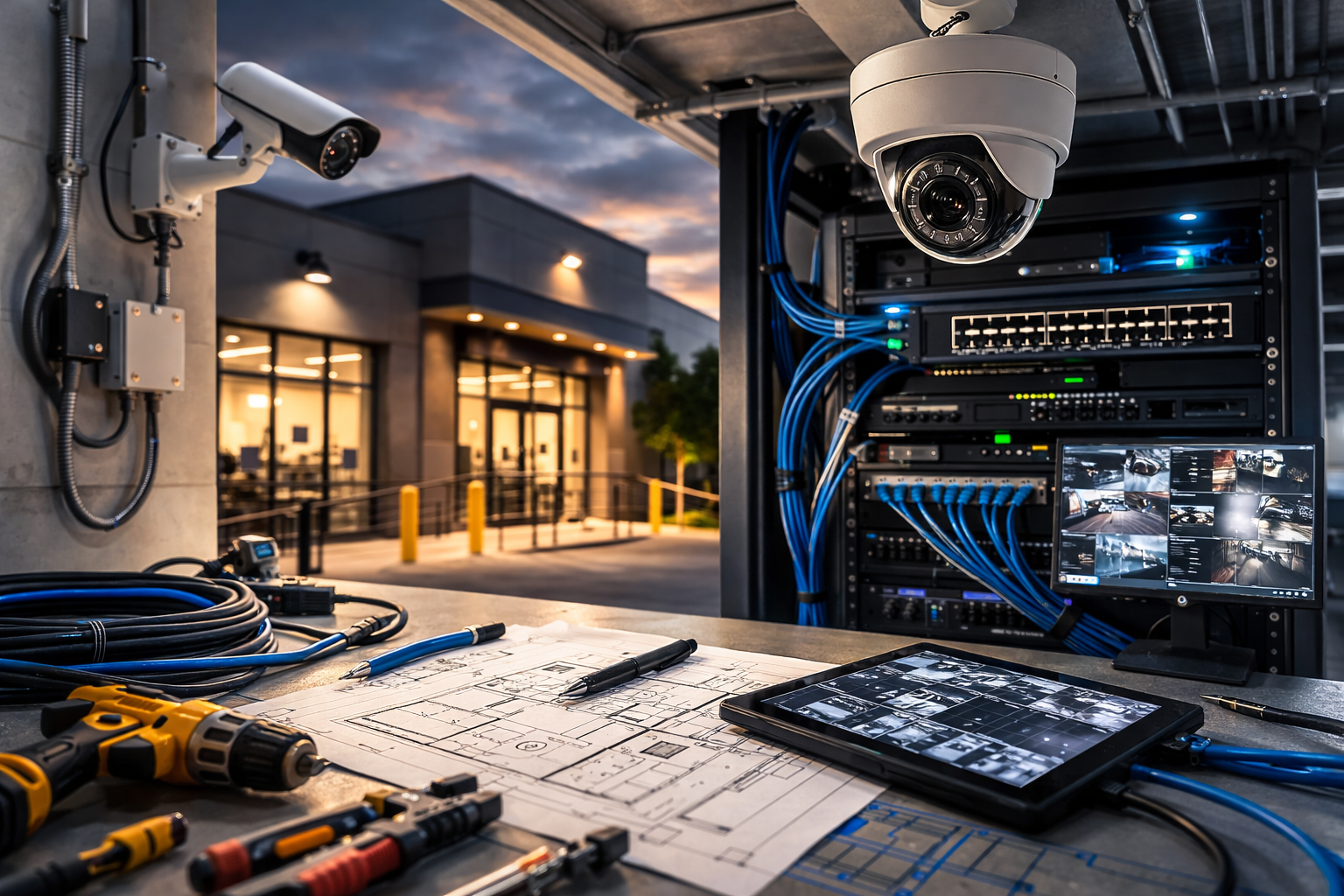
Commercial CCTV Camera Installation in Central Florida: What “Done Right” Actually Means A commercial camera system usually fails in the least dramatic way possible: the picture is washed out at the loading dock, the back hallway is a blur, or the video you need is overwritten because storage was undersized. Nobody notices until there is an incident — and then everyone suddenly cares about lens choice, cable routes, PoE capacity, and whether the network switch can actually power the cameras. A professional commercial CCTV camera installation is less about hanging hardware and more about building dependable low-voltage infrastructure. When it is designed and installed correctly, it becomes a system your operations team can rely on: clear video, predictable retention, stable remote access, and the ability to expand without ripping everything out. For businesses in Orlando, Tampa, Leesburg, Clermont, and throughout Central Florida, that difference matters. What “Done Right” Looks Like in Commercial CCTV Installation The goal of any business security camera installation is simple: Capture usable video of critical areas Retain it for the required time period Provide secure access to authorized users Avoid introducing new network or compliance risks In practice, that means your commercial CCTV installation should deliver: Consistent image quality across lighting conditions Clean, labeled, and documented cabling pathways Properly sized PoE and network capacity Recording settings aligned with real-world needs Equipment mounted securely and serviceable long-term A quality installation also respects the building. No exposed cabling. No damaged ceiling tiles. No loose mounts that shift over time. If your facility has compliance requirements (healthcare, financial, education, municipal), the installation must support those policies — including equipment location, access control, and documented retention standards. Planning a Commercial CCTV Camera Installation: Start With Coverage, Not Camera Count Most problems begin with a shopping list approach: “We need 16 cameras.” The better starting point is coverage. What areas need visibility? What level of detail is required? What lighting conditions will the cameras face? A lobby camera may only need general activity coverage. An access-controlled door typically requires face-level identification. A parking lot may need wide coverage — but a gate arm or license plate area may require a tighter, dedicated view. Warehouses, clinics, churches, and office buildings usually require a mix of: Wide situational awareness Focused identification zones Asset protection views Receiving and shipping coverage Lighting must also be evaluated at the times your building is actually used. A camera that looks fine at noon may be unusable at 7 p.m. due to backlighting from glass storefronts or exterior doors. Professional commercial CCTV contractors plan around those realities before equipment is ordered. Cabling and Network Design: Where Commercial Installations Succeed or Fail Commercial CCTV is a low-voltage infrastructure project. Most modern systems use IP cameras powered by PoE (Power over Ethernet) . That allows power and data over a single Category cable run — usually Cat6 in commercial environments. But not all PoE is equal. High-resolution cameras and PTZ units can require higher power budgets. A switch that “supports PoE” can still fail if it is undersized or overloaded. A properly designed commercial IP camera installation includes: Supported and protected Category cable runs Correct terminations and labeling Outdoor-rated cabling where required Fiber optic backbone when distance or interference demands it VLAN or network segmentation planning with IT If you have multiple buildings or detached warehouses, fiber optic cabling is often the right long-term solution in Central Florida commercial facilities. When network design is treated as an afterthought, performance problems follow. Recording, Retention, and Remote Access: Where the Real Costs Show Up Storage planning is where many business security camera systems disappoint owners. Retention depends on: Resolution Frame rate Compression Continuous vs motion recording Camera count Higher resolution improves detail — but increases storage and network load. Before installation, define: Minimum retention days for operations Policy or contractual requirements Incident history (how long after events footage is requested) Many businesses need 14–30 days. Some require 60–90 days depending on industry. Remote access must be handled securely. That means: Multi-factor authentication Strong password policies Proper firewall configuration No exposed recorders to the public internet Professional commercial CCTV installation includes secure remote access configuration — not just camera mounting. Installation Details That Impact Image Quality and Reliability Two systems using the same camera models can produce very different results. Mounting height and angle determine whether you capture faces or just the tops of heads. Too high reduces identification quality. Too low invites tampering. Lighting planning is critical in Florida environments. Bright exterior doors, reflective floors, and high heat conditions affect image performance. Exterior installations require: Properly sealed penetrations UV-resistant cabling Weather-rated enclosures Corrosion-resistant mounting hardware Humidity and storms in Central Florida are real design considerations. Improper sealing leads to intermittent failures and service calls later. Commissioning is also essential. A professional install validates: Camera views Motion zones PoE load and switch stability Recording confirmation User access permissions Issues should be caught while ladders are still on site — not during an incident. Choosing Between NVR, Cloud, or Hybrid Recording There is no universal “best” system. An on-premises NVR can be cost-effective at scale and offers local control. It must be physically secured and properly maintained. Cloud-managed systems simplify remote access and off-site retention but depend on reliable internet and typically involve ongoing licensing costs. Hybrid systems combine local recording with cloud backup for critical cameras. The right choice depends on: Site distribution Internet reliability Budget preferences (capital vs operating expense) Sensitivity of footage A professional site survey evaluates bandwidth, storage calculations, and long-term scalability — not guesses. Coordinating CCTV With Access Control and Structured Cabling Commercial camera systems rarely stand alone. They often integrate with: Access control systems Video intercoms Door events Conference room A/V Existing structured cabling infrastructure If you want door events correlated with video, placement and timestamp alignment matter. Coordinating all low-voltage scope under one contractor reduces ceiling disruption, duplicated labor, and documentation gaps. What to Expect From a Professional Commercial CCTV Contractor A qualified commercial CCTV contractor in Central Florida should: Conduct a thorough site walkthrough Discuss coverage goals and operational risks Evaluate lighting and mounting conditions Plan cabling pathways and equipment locations Coordinate with IT or property management Provide labeled, documented infrastructure You should be left with: Clean rack or wall layouts Organized and labeled cabling Documented camera locations Storage and retention configuration details A system that can expand without reconstruction Commercial CCTV Installation in Central Florida If you are planning a commercial CCTV camera installation in Orlando, Tampa, Leesburg, Clermont, or anywhere in Central Florida , the difference between “installed” and “installed correctly” becomes clear over time. At GPZ Cabling Inc., commercial security camera installation is treated as infrastructure — not just equipment. Clean cabling, proper mounting, network coordination, and thorough commissioning are part of the standard.  Request a free site survey at: https://www.gpzcabling.com The best camera system is the one that quietly works for years — because the coverage was planned correctly, the low-voltage infrastructure was installed cleanly, and the system matches how your business actually operates.
February 26, 2026
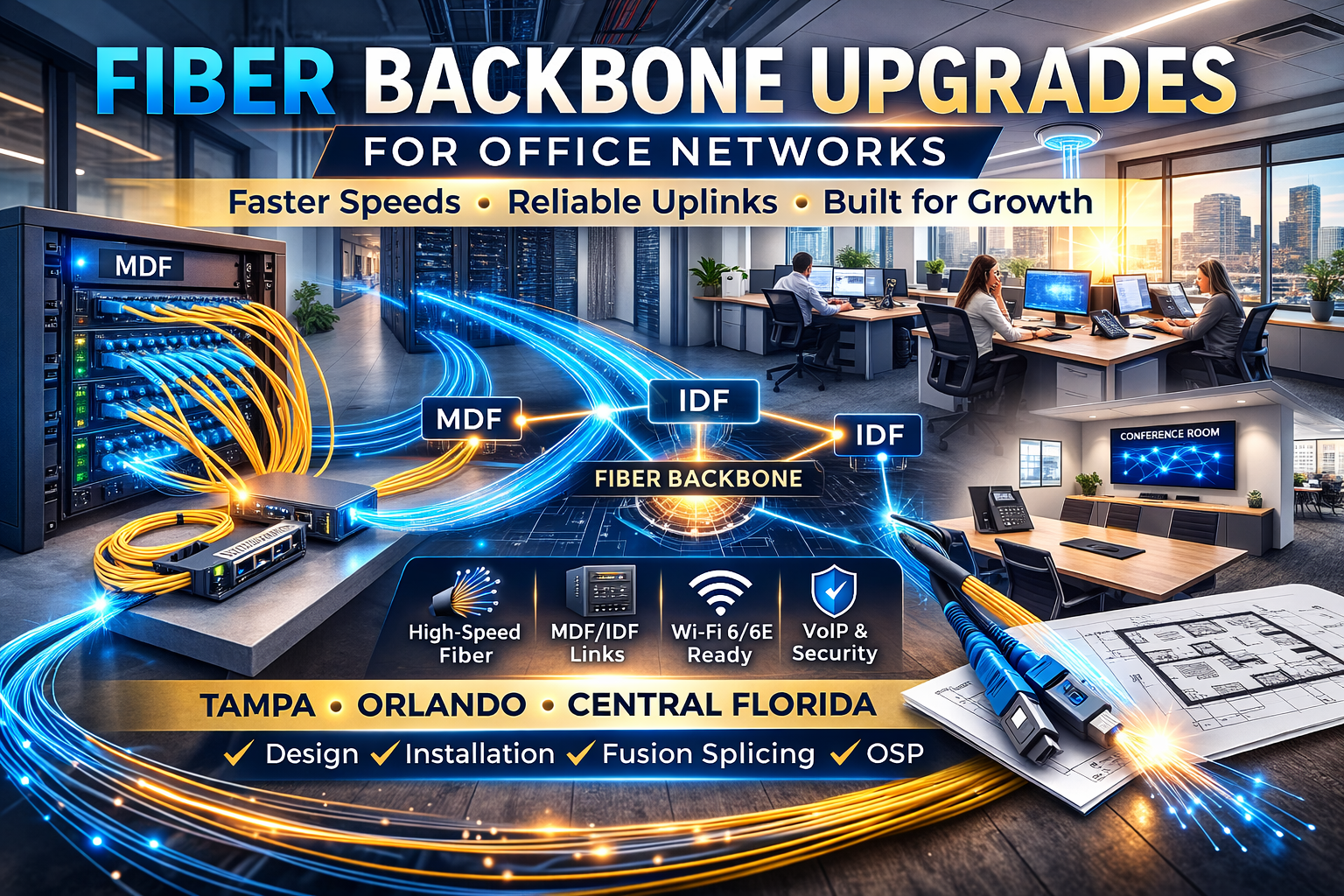
Fiber Backbone Upgrade for Office Networks in Tampa & Central Florida Your internet connection can be fast. Your Wi-Fi can be perfectly tuned. …and your office can still feel slow. If file transfers drag, VoIP calls get choppy during peak hours, or adding security cameras creates network bottlenecks, the issue often isn’t your ISP. It’s your office network backbone . A properly designed fiber backbone upgrade for office environments connects your MDF, IDFs, and key network infrastructure with the speed, stability, and scalability your business needs. For offices across Tampa, Orlando, Lakeland, and Central Florida , upgrading to fiber backbone infrastructure is one of the most effective ways to eliminate hidden performance limits. What a Fiber Backbone Upgrade Actually Does In most commercial offices, the backbone connects: MDF (Main Distribution Frame) IDFs (Intermediate Distribution Frames) Data rooms Additional suites or buildings Copper cabling works well for desks and workstations. But for: ✔ Long distances ✔ High-bandwidth uplinks ✔ Multi-floor offices ✔ Multi-suite environments Fiber provides: Higher speed Greater stability Future-ready infrastructure A true commercial fiber backbone upgrade includes: Pathways (conduit, tray, innerduct) Fiber type selection Termination hardware Splicing or pre-terminated solutions Labeling & documentation It’s not just pulling cable — it’s building infrastructure. Signs Your Office Network Needs a Fiber Backbone Many businesses realize they need fiber when: Wi-Fi 6 access points strain uplinks VoIP calls suffer during peak usage Security camera systems expand Switches are daisy-chained to compensate New suites or floors are added Even when speed isn’t the issue, stability often is. Fiber eliminates interference risks from electrical systems, elevators, and long copper runs. Single-Mode vs Multimode: Planning for Growth Most office fiber upgrades involve choosing between: Multimode Fiber Common for in-building backbone links. Single-Mode Fiber Best for: Long runs Multi-building campuses Future 40Gb+ readiness For many Central Florida offices, single-mode offers the best long-term flexibility. Why Strand Count Matters Installing “just enough” fiber often creates future limitations. A well-designed backbone allows for: Redundant paths Future IDFs Additional switch uplinks Expansion into new suites Planning ahead avoids costly retrofits later. Pathways & Firestopping Matter Professional fiber installation includes: ✔ Proper bend radius ✔ Managed pathways ✔ Rated penetrations In multi-floor office buildings, maintaining fire ratings is critical for inspections and tenant improvements. Splicing vs Field Termination Fusion splicing is the preferred method for: Low-loss performance Long-term reliability Backbone and riser applications The goal is clean, protected terminations that are labeled and tested. Fiber Backbone Upgrades During Office Buildouts Fiber projects often align with: Tenant buildouts Suite expansions New floors Security system upgrades Conference room tech installs Addressing backbone infrastructure during construction reduces future disruption. Multi-Building Office Sites For campuses or detached facilities, outside plant (OSP) fiber may be required. This can involve: Trenching Directional boring Conduit pathways Utility coordination Treating fiber as site infrastructure avoids mismatched systems later. What a Proper Upgrade Includes A professional office fiber backbone installation should deliver: Labeled fiber links MDF-to-IDF mapping Insertion loss testing OTDR testing when needed Updated documentation This ensures IT teams can maintain and expand the system confidently. Fiber Backbone Installation in Tampa & Central Florida GPZ Cabling Inc. provides: ✔ Office fiber backbone upgrades ✔ MDF / IDF interconnects ✔ Fusion splicing ✔ Demarc extensions ✔ OSP fiber installation Serving: 📍 Tampa 📍 Orlando 📍 Lakeland 📍 Central Florida Start with a free site survey: 👉 https://www.gpzcabling.com The Bottom Line A fiber backbone isn’t visible to employees — but it supports everything they rely on. When installed correctly, it enables: Faster uplinks Stable VoIP Reliable Wi-Fi Easier expansion If your office grows tomorrow, your backbone should already be ready.
February 23, 2026
Commercial Office Network Cabling Installation: 8 Essentials for a Reliable Business Network When a new office opens, everything seems ready — until the first Monday morning. Phones sound “warbly.” Video calls freeze when the conference room fills up. Wi-Fi struggles despite adding more access points. Most of the time, the issue isn’t your internet provider or your switch brand. It’s the physical network infrastructure . A properly designed commercial office network cabling installation determines whether your business runs smoothly — or constantly depends on IT support tickets. For businesses in Tampa, Orlando, Lakeland, and across Central Florida , a structured cabling system isn’t just wiring — it’s the foundation of your operations. What a Professional Office Cabling System Looks Like A well-built commercial structured cabling system is designed for predictability and long-term support. That means: Clearly defined MDF (Main Distribution Frame) Properly placed IDF (Intermediate Distribution Frame) closets Star topology cabling Clean pathways Documented labeling Every workstation, VoIP phone, access point, printer, camera, and badge reader connects back to the network closets through structured horizontal cabling — often supported by fiber backbone links. This is especially important for: Medical offices Multi-suite tenant buildouts Professional offices Financial institutions Even a 40-person office needs enterprise-grade infrastructure. 1. Start with Business Requirements — Not Cable Counts A common mistake in office cabling projects is planning based on headcount instead of real device needs. A 10-person area may require: VoIP phones Workstations Docking stations Printers Security cameras Access control devices Wireless access points That quickly becomes 25–30 ports. Planning a commercial office network cabling installation around real-world use prevents costly rework later. 2. Choose the Right Cabling: Cat6, Cat6A, or Fiber Most Central Florida office environments use: Cat6 Reliable and cost-effective for workstations. Cat6A Ideal for: High-density Wi-Fi Video conferencing Future 10Gb readiness Fiber Best used for: MDF-to-IDF backbone links Multi-building connections High-bandwidth environments A professional network cabling contractor evaluates performance needs — not just installation cost. 3. MDF & IDF Placement Matters More Than You Think Closet placement impacts: Cable length Expansion capability Troubleshooting ease A poorly placed closet leads to: Long runs Congested pathways Performance limitations Proper IDF placement shortens runs and improves scalability — especially in large office layouts or tenant buildouts. 4. Pathways and Cable Management Drive Long-Term Stability A professional installation includes: ✔ Supported cable pathways ✔ Separation from electrical lines ✔ Organized rack layouts ✔ Proper patch panel installation Cabling should never be: ✖ Resting on ceiling tiles ✖ Tied to sprinkler systems ✖ Packed into tight spaces Inside the rack, clean patching allows future moves without disruption. 5. Termination and Labeling Are Critical Consistent terminations (typically T568B) prevent: Packet loss PoE instability Speed negotiation issues Clear labeling connects: Faceplate Patch panel port Cable ID Without it, every change becomes a troubleshooting project. 6. Plan for Power Over Ethernet (PoE) Modern offices rely heavily on PoE devices: VoIP phones Security cameras Access control Wireless access points A professional commercial cabling contractor ensures: Proper cable quality Sufficient switch PoE budget Device placement for performance Installing security and access systems during your office cabling project keeps everything consistent. 7. Certification Testing Protects Uptime Continuity tests aren’t enough. Certification testing verifies: ✔ Category performance ✔ Bend radius integrity ✔ Proper terminations ✔ Run length compliance Fixing issues during installation is easy. Fixing them months later is not. 8. Avoid Common Office Cabling Mistakes The most common issues we see: Treating cabling as an afterthought Relying too heavily on Wi-Fi Using multiple vendors without unified standards Structured cabling is infrastructure — not an add-on. When to Hire a Commercial Cabling Contractor If your office includes: Multiple suites Security systems Access control Fiber backbone A/V systems It’s best to involve a structured cabling contractor early. A site survey can confirm: Closet locations Device placement Pathways Future expansion readiness  Office Network Cabling in Tampa & Central Florida At GPZ Cabling Inc. , we provide: Commercial office network cabling Structured cabling installation Fiber backbone systems Tenant buildout cabling Serving: 📍 Tampa 📍 Orlando 📍 Lakeland 📍 Central Florida Start with a free site survey: 👉 https://www.gpzcabling.com A reliable office network begins with the right foundation — not guesswork.
February 22, 2026
Cat6 cable drops installation for offices and sites: planning, pathways, labeling, testing, and what separates a clean pass from rework later.
February 21, 2026
Learn what a structured cabling contractor does, what to ask, and how to avoid costly rework when installing Cat6, fiber, security, and A/V.
Thank You All for 2023, Welcome 2024!
January 1, 2024
Hello, wonderful GPZ Cabling Inc. community!
Zephyrhills Fire Station #3 Hudson
December 29, 2023
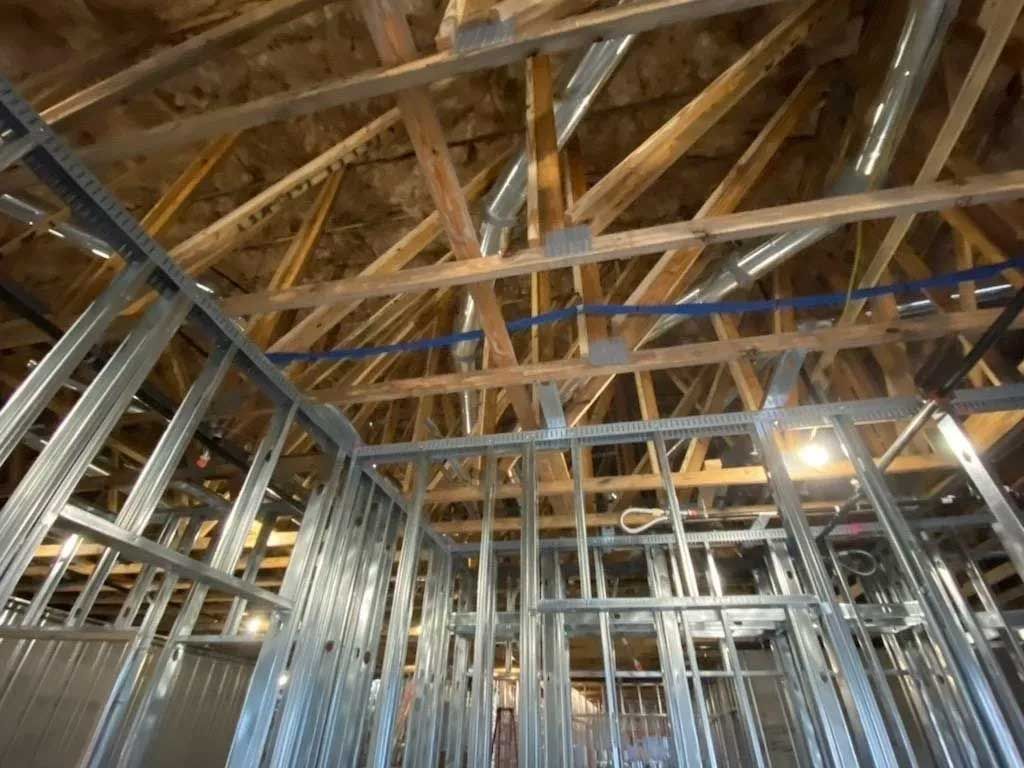
Another Successful GPZ Cabling Rough In for the Zephyrhills Fire Station#3 in Hudson, FL.
Another GPZ Cabling Installation in the Books!
December 4, 2023
Another wonderful GPZ Cabling low voltage and audio/video project in the books for a brand new client in Ocala, fl.
Point Of Sale Installation, Setup And Cabling!
November 27, 2023
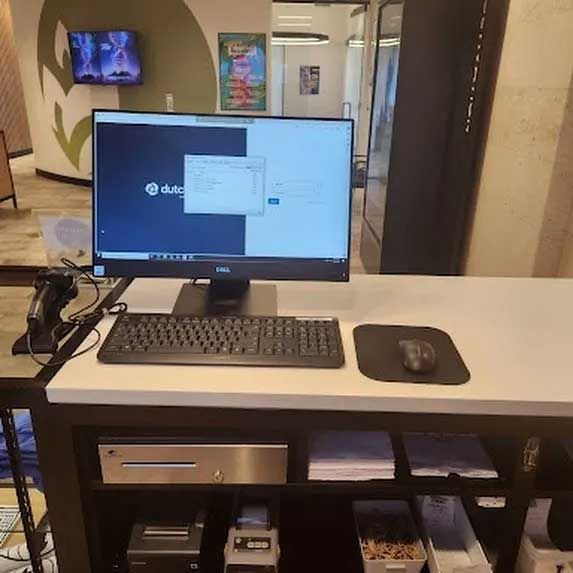
POINT OF SALE INSTALLATION, SETUP AND CABLING! Photo of a recently completed complete POS System Upgrade for a local dispensary.