Fiber Optic Cabling Services in Central Florida: Installation, Splicing, and Testing
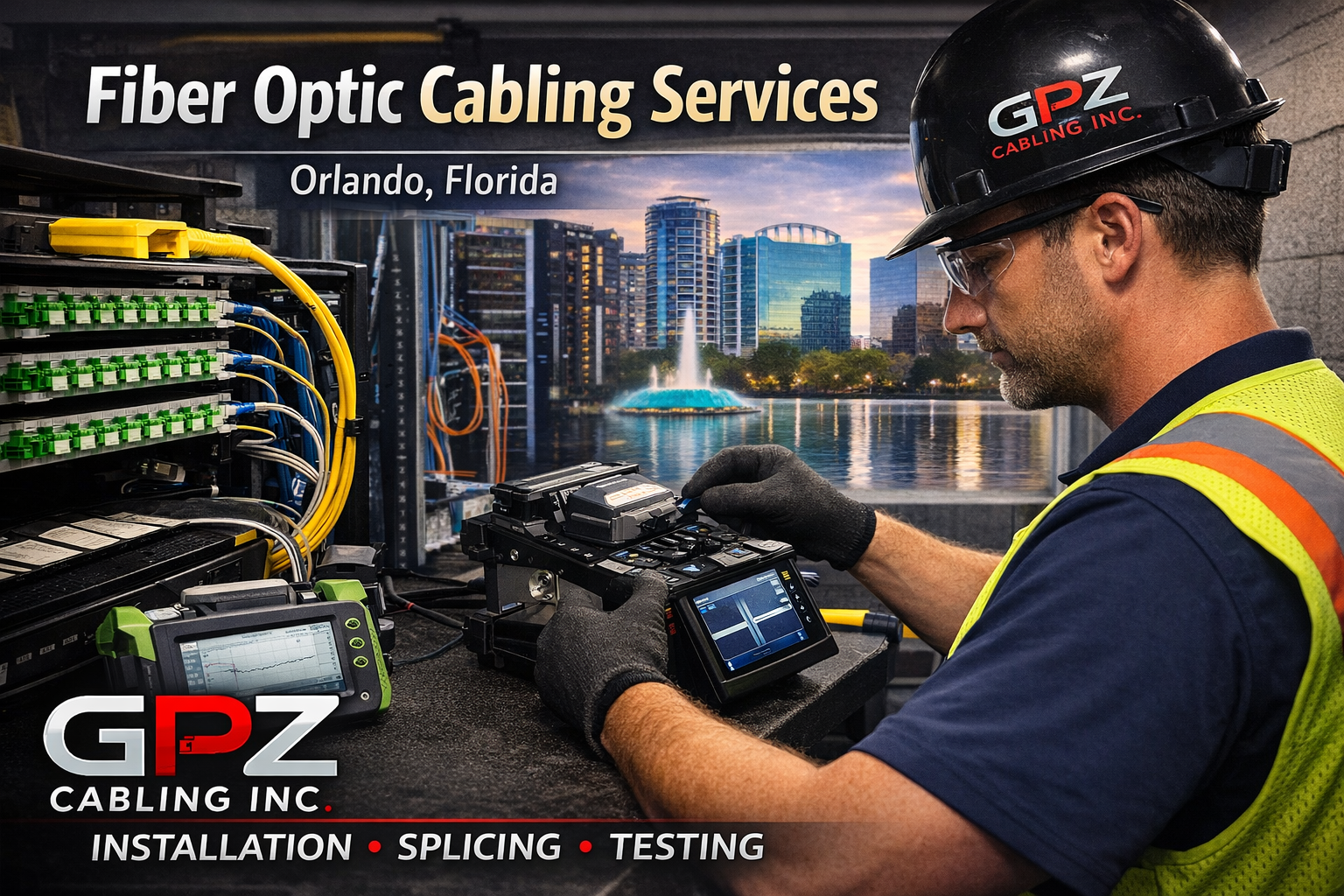
Fiber Optic Cabling Services in Central Florida: Installation, Splicing, and Testing
A fiber run that looks fine on day one can still become a problem six months later. That usually happens when the installation was treated like a simple cable pull instead of a system that needs to be designed, terminated, tested, and documented correctly.
For IT managers, facility teams, property managers, and general contractors, that distinction matters. Fiber is often the backbone between telecom rooms, suites, IDFs, MDFs, and even separate buildings. If it is installed poorly, the result is not just a weaker signal. It can mean avoidable downtime, failed certifications, messy repairs, and expensive return visits.
GPZ Cabling Inc. provides professional fiber optic cabling services throughout Central Florida, including Orlando, Tampa, Lakeland, Clermont, Leesburg, and surrounding areas.
What Fiber Optic Cabling Services Should Actually Include
Good fiber optic cabling services go well beyond pulling cable through conduit or ceiling space. The real value is in planning the pathway, choosing the right fiber type, protecting bend radius, managing terminations, and verifying performance before turnover.
That starts with scope. Some projects need backbone fiber inside a single building. Others need outside plant connectivity between structures, which may also involve trenching, directional boring, handholes, conduit, and demarc extensions.
A contractor that can handle both the cabling work and the surrounding low-voltage infrastructure usually reduces coordination issues and finger-pointing later.
It also matters whether the environment is office, medical, industrial, retail, education, or mixed-use commercial. A clean corporate office build-out has different requirements than a warehouse, a healthcare facility, or a campus with multiple detached buildings.
The cable type, pathway protection, labeling standards, and testing process should reflect the site, not a one-size-fits-all approach.
Fiber Optic Cabling Services We Provide
Professional fiber projects often involve multiple components beyond the cable itself. At GPZ Cabling Inc., our commercial fiber optic services include:
• Fiber backbone installation
• Building-to-building fiber connectivity
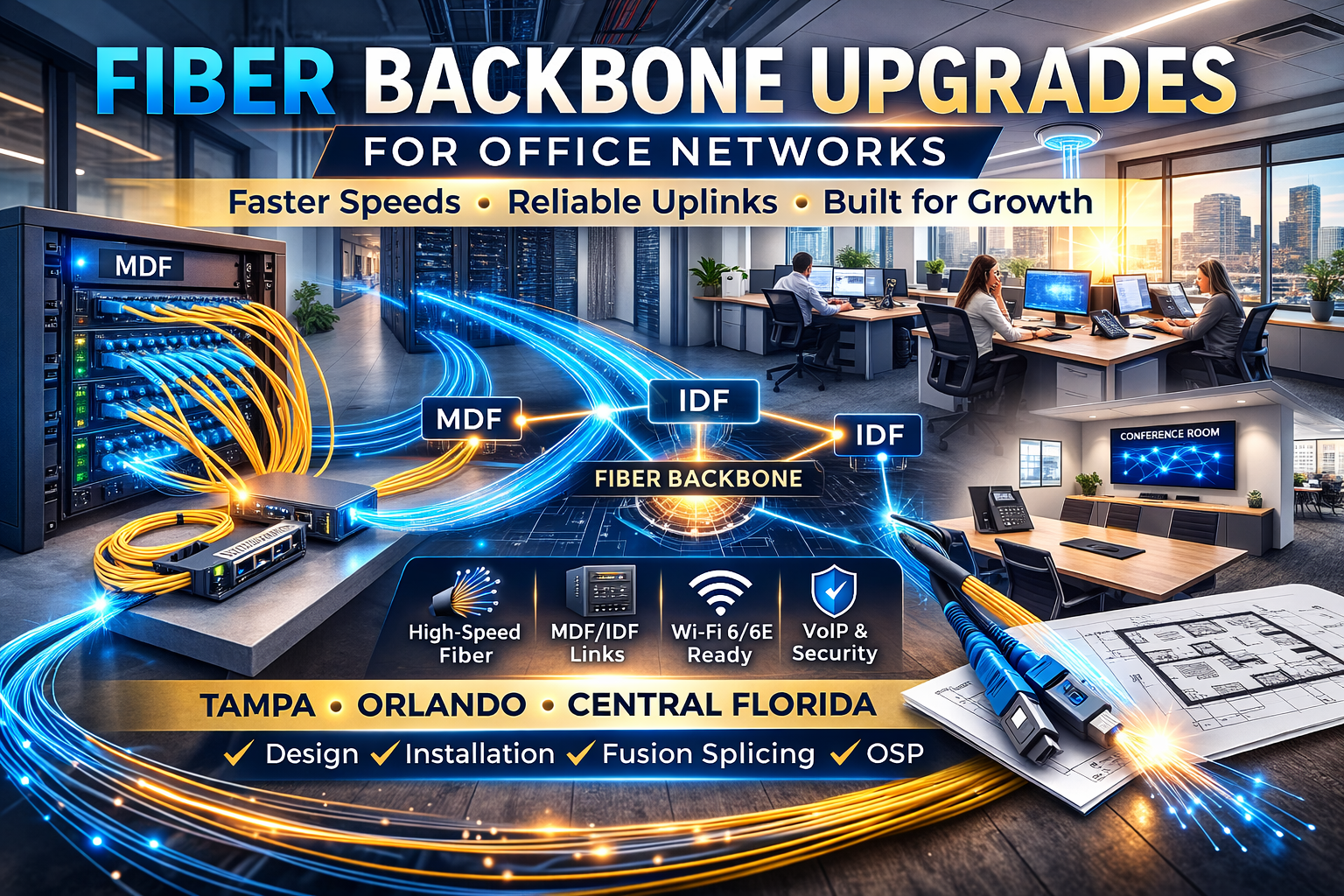
• Fusion splicing
• Fiber optic termination and patch panels
• Fiber troubleshooting and repair
• OTDR testing and certification
• Demarcation extensions
• Data center fiber builds
• Campus fiber network installations
• Fiber upgrades and replacements
These services support offices, medical facilities, warehouses, retail centers, schools, and multi-building commercial properties.
Choosing the Right Fiber Optic Cabling Service for the Job
Not every fiber project calls for the same materials or the same installation method.
Singlemode and multimode fiber serve different purposes, and there is no benefit in paying for the wrong design.
If you are connecting longer distances, linking buildings, or planning for future bandwidth growth, singlemode fiber is often the best long-term solution.
For shorter internal backbone runs inside commercial buildings, multimode fiber may still be appropriate depending on the network design and active equipment.
The same goes for termination strategy.
Pre-terminated assemblies can work well in controlled environments, but fusion splicing and field termination are often better choices when pathways are complex or exact distances are required.
Fusion splicing typically provides lower signal loss and stronger long-term reliability than mechanical alternatives.
A qualified contractor should be able to explain those trade-offs clearly. If the answer is simply “this is what we always use,” that is a red flag.
Why Workmanship Matters in Fiber Installation
Fiber cable is not forgiving of careless installation. Pull tension, bend radius, pathway congestion, enclosure management, and cleanliness all affect final performance.
A job can fail even when high-quality materials are used if the field practices are poor.
That is why professional workmanship standards are critical in fiber optic cabling services.
Clean routing, proper supports, disciplined slack management, and clearly labeled strands make future maintenance easier and reduce risk during upgrades.
On the termination side, contamination is a constant issue. A connector that is not properly cleaned and inspected can create signal loss that wastes hours of troubleshooting.
Fiber projects also require coordination with other trades including electricians, IT teams, access control vendors, security camera installers, and building management.
A qualified contractor should not just install the cable. They should manage the work so the installation is completed without disrupting the rest of the project.
Building-to-Building Fiber Connectivity
One of the most common needs across Central Florida commercial properties is extending connectivity between buildings on the same property.
Examples include:
• Connecting an office building to a warehouse
• Linking telecom rooms between structures
• Connecting a leasing office to detached amenities
• Networking multiple medical buildings on a campus
This type of work is where many projects go sideways because the fiber installation is only one part of the job.
Outside plant conditions, underground obstructions, conduit capacity, building entry points, and weather exposure all affect the final result.
If multiple vendors handle trenching, boring, conduit installation, fiber pulling, splicing, and testing, coordination problems often arise.
When a single contractor manages both the outside plant pathway and the fiber installation, projects typically run smoother and quality is easier to control.
Fiber Testing, Certification, and Documentation
A fiber link is not complete just because light comes up.
Professional fiber optic cabling services should always include testing and documentation.
Depending on the project, this may include:
• Insertion loss testing
• Polarity verification
• OTDR testing
• Fiber certification reports
• Labeling and identification
The goal is simple: verify that the installed fiber meets performance standards and create a record that supports future troubleshooting and upgrades.
Documentation is often where lower-cost installers cut corners. They may leave a working link but provide no labels, no test results, and no usable as-built documentation.
That turns every future move or outage into a guessing game.
When to Upgrade or Replace Existing Fiber
Not every fiber issue requires full replacement.
Sometimes the real problem is damaged connectors, poor splice work, undocumented routing, or improperly protected pathways.
In other cases, the infrastructure itself is outdated for the bandwidth or redundancy requirements of the network.
A proper fiber site survey should determine the difference.
If the existing fiber can be tested, cleaned, and reused, that may be the most cost-effective solution. If the infrastructure has repeated failures, water intrusion, or unknown splices, replacement may save money over time.
What to Look for in a Fiber Contractor
If you are evaluating providers, price should not be the only factor.
Look for a licensed low voltage contractor with trained technicians and experience installing fiber networks in commercial environments.
Key things to ask include:
• Do they perform fusion splicing in-house?
• Do they provide OTDR testing and documentation?
• Can they support outside plant fiber projects?
• Do they offer service after installation if issues arise?
It also helps to choose a contractor that understands the full environment around the fiber network.
In many buildings, fiber ties directly into structured cabling systems, security cameras, access control systems, wireless networks, and conference room AV infrastructure.
A contractor who understands those dependencies usually makes better decisions in the field.
The Real Cost of Getting Fiber Installation Wrong
Bad fiber work rarely fails immediately. Instead, it creates intermittent outages, signal loss, or expansion headaches months later.
The initial installation may appear cheaper, but the real cost appears when another contractor must trace, test, resplice, or replace what should have been installed correctly the first time.
Experienced buyers focus on risk rather than just line-item cost. They want verified performance, clean installation, accurate documentation, and a contractor who supports the network after turnover.
Fiber Optic Cabling Services in Central Florida
If you are planning a new commercial build-out, building-to-building fiber installation, or a backbone upgrade, start with a professional site survey.
GPZ Cabling Inc. provides fiber optic cabling services throughout Central Florida, including Orlando, Tampa, Lakeland, Clermont, and surrounding areas.
Our team handles the full process including:
• Site surveys and design
• Fiber installation
• Fusion splicing
• Fiber testing and certification
• Labeling and documentation
The goal is simple: deliver a fiber infrastructure that performs reliably and is easy to maintain long after the project is complete.